How AI Is Transforming B2B Content Syndication in 2026
Published:
|
By
MassMetric

B2B marketing has never been simple. But somewhere between the explosion of content channels, shrinking attention spans, and buyers who now complete over 70% of their purchase research before ever talking to a sales rep, that approach began to lose its effectiveness. Marketers who spent years building reliable syndication pipelines are watching their cost-per-lead climb while MQL-to-SQL conversion rates fall.
Content syndication is not the issue. The issue is that most teams are using an outdated version of it, built for a time when form fills were enough to prove demand. That standard no longer holds. What has replaced it is a more advanced approach. AI-driven content syndication does not just distribute assets. It figures out where content should appear, who should see it, and keeps improving those decisions over time.
Why Traditional B2B Content Syndication Has Reached Its Limits
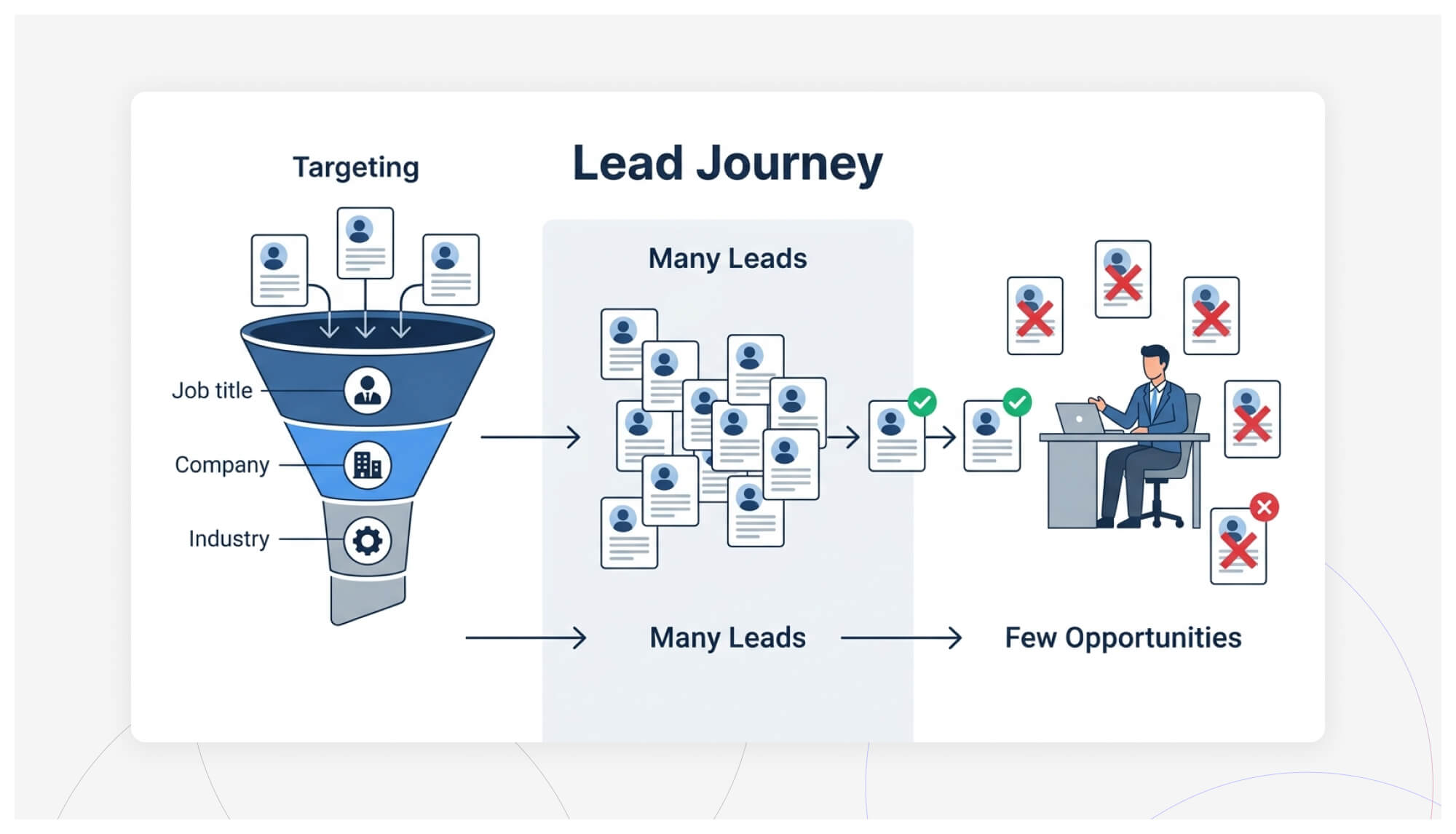
Ask any demand generation manager what their biggest frustration was in 2024 or 2025, and most will give you a similar answer: the leads look right on paper but do not translate into real conversations once sales get involved. Job titles match. Company size matches. But there's no actual purchase intent behind the form to fill, just someone who downloaded a report out of curiosity with no budget, no timeline, and no buying authority.
The Core Failure of Demographic-Only Targeting
This is the core failure of traditional syndication. It was built around audience demographics, not buyer behavior. You'd select a channel because it reached "IT decision-makers at mid-market SaaS companies," but you had no visibility into whether those specific decision-makers were in a buying cycle. Generic distribution meant generic results, and the industry quietly normalized a lead quality problem that cost sales teams enormous amounts of time.
Why Manual Segmentation Made It Worse
Manual segmentation compounded the damage. When audience targeting depends on human-defined parameters refreshed quarterly, you're always working with yesterday's data in a market that moves daily. Buyer intent doesn't respect campaign planning cycles.
What AI Content Syndication Actually Changes
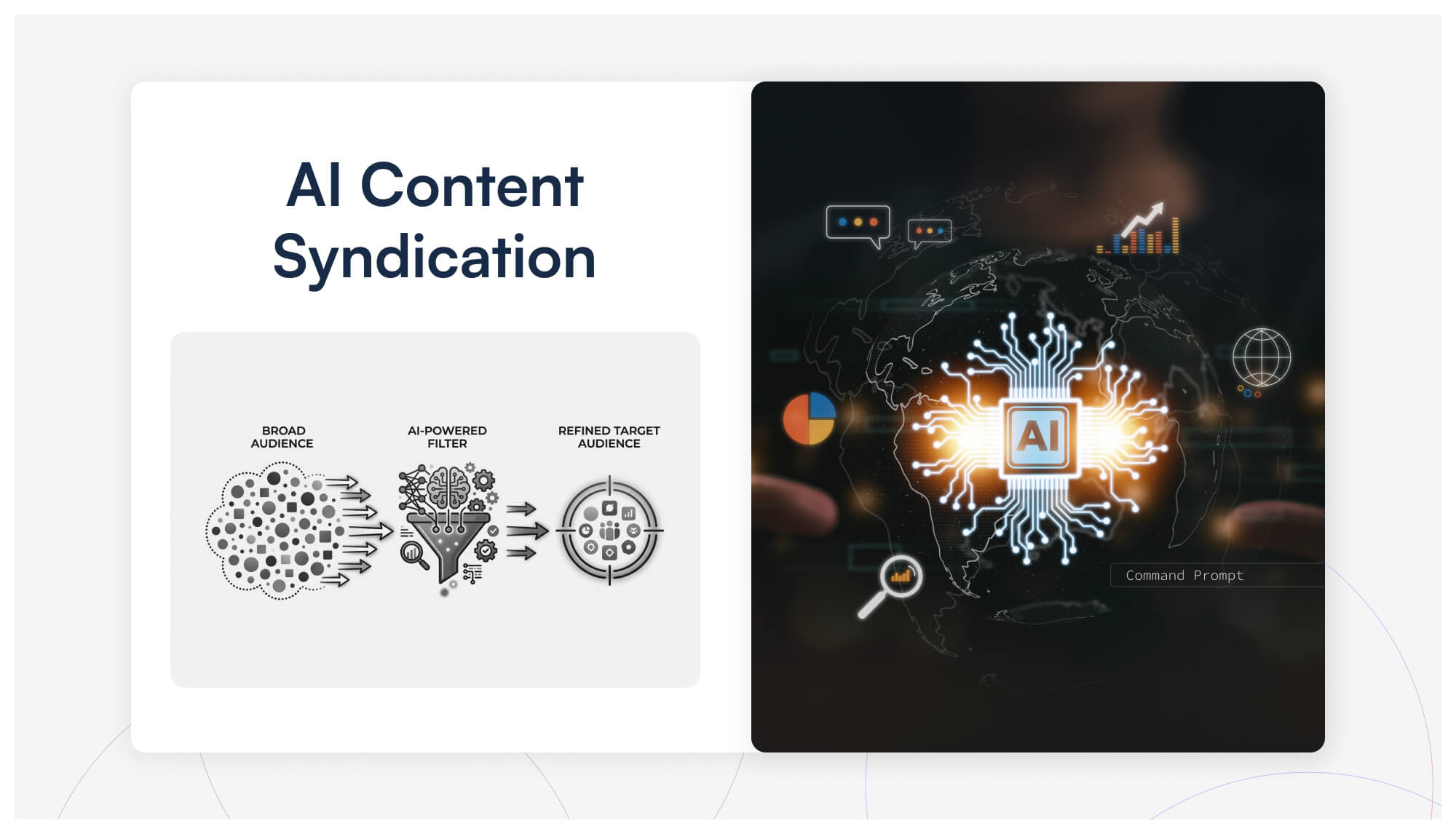
The shift to AI content syndication isn't primarily about efficiency, though the efficiency gains are real. The deeper change is in the quality of the target decision itself.
Intent Signals Over Audience Profiles
Modern AI-driven syndication platforms ingest behavioral signals that traditional systems couldn't process at scale. This includes which topics a prospect's company is researching, how frequently they engage with content, and whether their engagement pattern points to early-stage awareness or late-stage evaluation. They separate generic content distribution from reaching buyers who are already in the process of evaluating options.
Predictive Audience Modeling
Predictive audience modeling takes this further. Instead of waiting for a prospect to identify themselves through a form fill, AI models can identify relevant accounts much earlier. They use behavioral patterns that match previous high converting customers, even before those accounts engage with your brand. That's a fundamentally different way to build a pipeline. Instead of casting wide and filtering down, you're starting with a refined target set and working from there.
How Intelligent Content Distribution Chooses Channels
The distribution logic changes, too. Intelligent content distribution means the system isn't just picking channels based on historical performance averages. It evaluates which combination of placements, such as LinkedIn, industry publications, email ecosystems, content discovery networks, is most likely to reach a specific account cluster at the right stage of their buying journey. It makes that calculation account by account, not campaign by campaign.
The Demand Generation Layer: Where It Gets Strategic
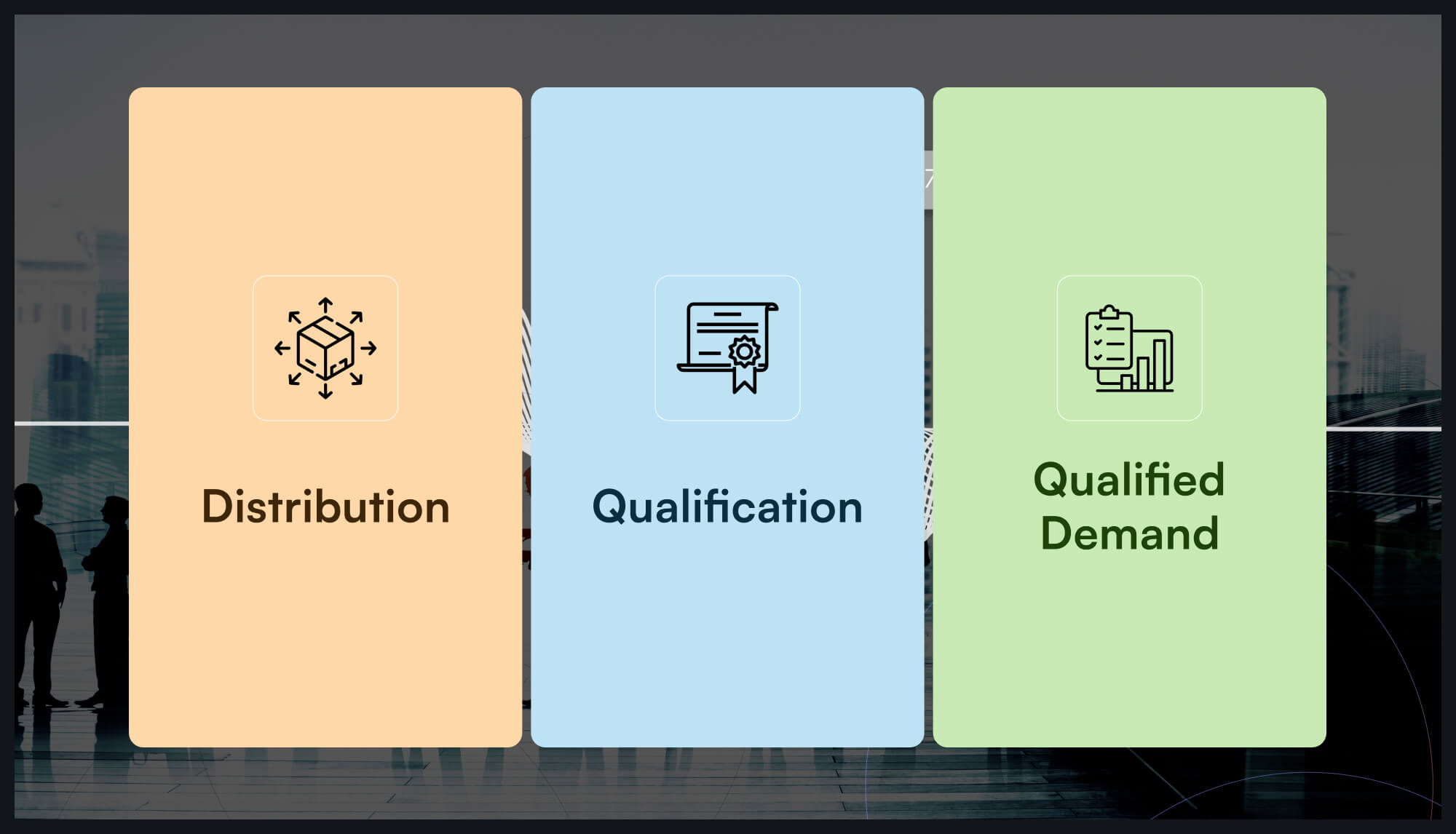
Syndication and demand generation have always been related, but AI makes the connection much tighter. When you treat them as separate functions, syndication ends up generating top of funnel volume. Demand generation is then left trying to figure out which of that volume actually matters. AI demand generation collapses that gap by building qualification logic directly into the distribution layer.
Real-Time Buyer Intent in Action
What does that look like in practice? A prospect downloads a technical comparison guide. The AI system notes that this is their third piece of content on that topic in two weeks. It also tracks that the company has been researching competitors and that someone from the same organization downloaded a pricing focused asset last month. The system doesn't wait for a human to connect those dots. It flags the account as a high-priority target, routes a personalized follow-up sequence, and adjusts syndication to spend toward similar account profiles.
Why This Is Predictive Marketing in Its Functional Form
This is what predictive marketing should look like in practice. It is not just a dashboard reporting past performance, but a system that reads buyer intent signals and acts on them in near real time.
AI's Role in Strengthening ABM Programs
ABM has always been a strong concept. It focuses on directing resources toward accounts most likely to generate revenue. In practice, though, execution was difficult because account selection and outreach personalization required a lot of manual effort. AI handles the prioritization continuously, pulling in intent data, firmographic signals, and engagement history to tell your team which accounts are warming up right now, not which accounts looked promising when you built the list six months ago.
AI Lead Generation: The Quality Problem, Finally Addressed

The volume-versus-quality debate in B2B lead generation has been going on for years, and it's largely a false choice created by unsophisticated targeting. When you're distributing broadly and qualifying manually, you get volume with poor signal. AI lead generation changes the economics because the qualification starts much earlier, at the targeting stage, not the review stage.
Why Behavioral Scoring Outperforms Static Rubrics
Behavioral scoring models trained on historical conversion data can weight signals in ways that human-designed lead scoring rubrics simply can't. A whitepaper download from a Director of IT at a 500-person company isn't worth the same as a whitepaper download from that same profile who also visited your pricing page, watched a product demo, and whose organization recently expanded its tech stack. AI scoring accounts for that entire engagement context. Human-designed rubrics usually don't.
The Sales Productivity Payoff
The result is fewer leads that go nowhere and more conversations that are actually worth having. Sales teams stop spending half their week chasing contacts who were never real opportunities and start spending that time on accounts the AI has already flagged as high readiness. For most B2B organizations, that's a structural change in how sales and marketing operate together, not a marginal improvement.
Conversational AI as a Qualification Layer
Conversational AI adds another layer. AI-powered chatbots handling initial prospect engagement aren't just answering FAQs. They're collecting qualification signals, routing high-intent visitors to the right content or the right sales rep and feeding engagement data back into the scoring model. Every interaction makes the system smarter.
The Challenges Worth Taking Seriously

This does not mean AI content syndication is a set-it-and-forget-it system. The organizations getting the most out of these systems are also the ones being honest about where AI falls short.
Data Privacy and Compliance
Data privacy is the most immediate constraint. Intent data collection operates in a complex compliance environment, GDPR, CCPA, and a growing body of regional regulation that varies by market. AI systems trained on behavioral data need governance frameworks that most marketing teams haven't built yet. This isn't a reason to avoid AI-powered syndication; it's a reason to build data practices that can support it responsibly.
Protecting Content Quality at Scale
Content quality deserves equal attention. There's a real risk in over-automating the content layer. AI can optimize distribution with precision, but the asset it's distributing still has to earn attention. A technically perfect syndication strategy built around mediocre content will produce mediocre results faster. The brands winning in this environment are using AI to amplify strong content, not to compensate for weak content.
Keeping Human Judgment in the Loop
And there's the human judgment question. Autonomous optimization systems make thousands of micro-decisions, but strategic decisions about positioning, messaging, and market focus still need human intelligence. The best-performing AI demand generation programs aren't the ones with the most automation. They're the ones where experienced marketers and AI systems are genuinely working together.
How Content Syndication Is Evolving
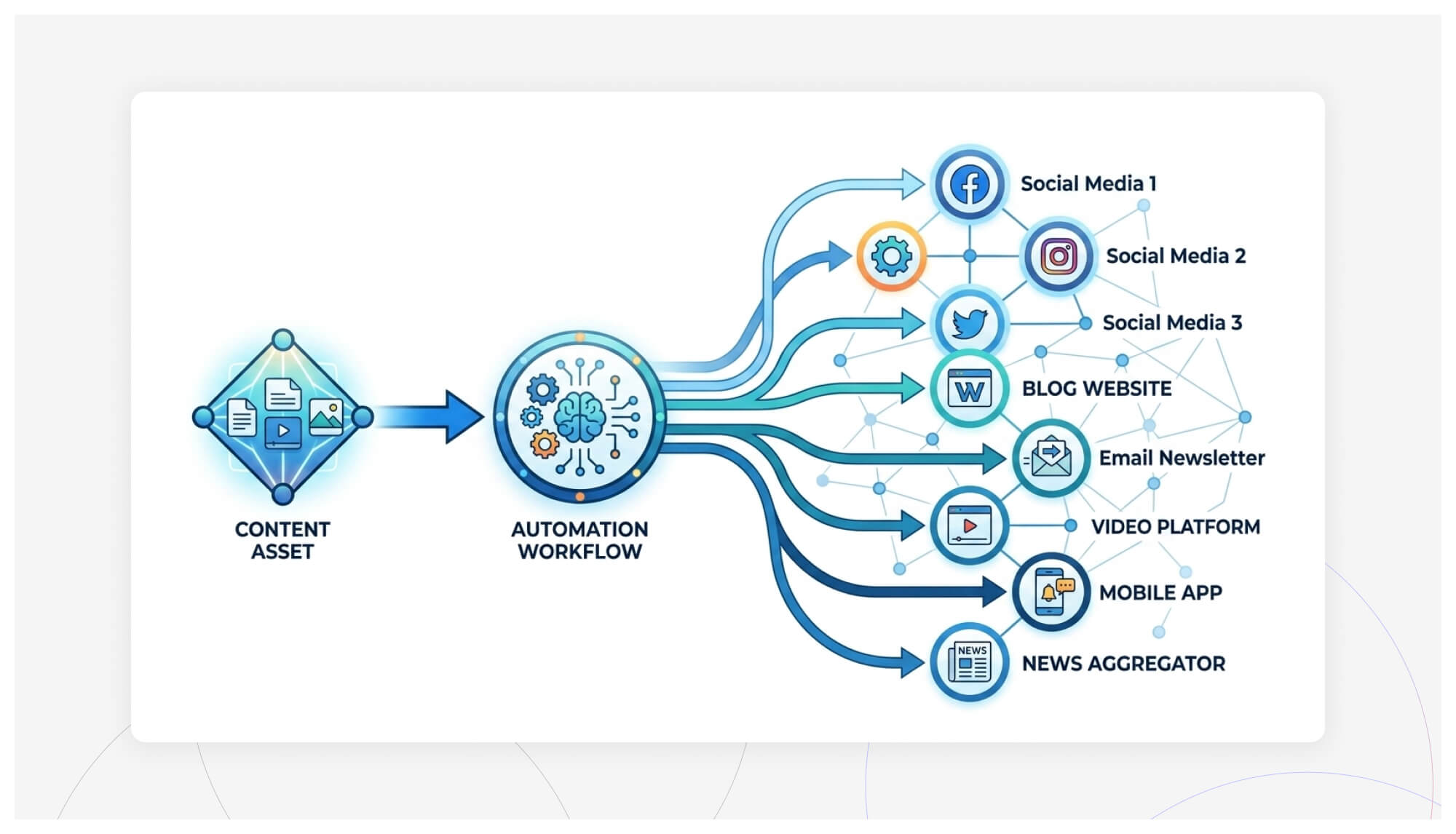
Syndication is moving toward a more automated model. Much of the execution, like placements and optimization, is handled by the system, while teams spend more time on strategy and creative work.
Autonomous Campaign Management as the New Standard
Autonomous campaign management, systems that refine audience targeting, adjust channel mix, and reallocate budget without waiting for manual review. These capabilities are already in place at more advanced organizations and will become standard within the next 18 to 24 months.
Revenue Intelligence Closes the Attribution Gap
Revenue intelligence is the next frontier. The gap between syndication activity and pipeline attribution has always frustrated CFOs who want to see marketing's impact on revenue, not just lead volume. AI systems can trace a closed deal back through its content touchpoints. They can identify which asset first engaged the buying group, which follow-up accelerated the cycle, and which channel produced the highest-value accounts. This is what will finally give B2B marketing the revenue attribution it has been promising for years.
Conclusion
The organizations investing in AI content syndication now aren't just improving campaign efficiency. They're building data assets and model performance that compound over time. Every campaign makes the Campaign smarter. Every conversion refines the behavioral model. The gap between AI-powered programs and manually run programs isn't static; it grows every quarter.
Many B2B brands are still relying on fixed audiences, generic distribution, and manual lead review. But AI has already changed how syndication works. The question now is how long you can afford to operate without it.
Ready to build a content syndication program that finds buyers before they find your competitors? Partner with MassMetric to deploy AI-powered demand generation that delivers a qualified pipeline at scale.
Frequently Asked Questions
|