AI-Powered B2B Demand Generation Strategy for 2026
Published:
|
By
MassMetric
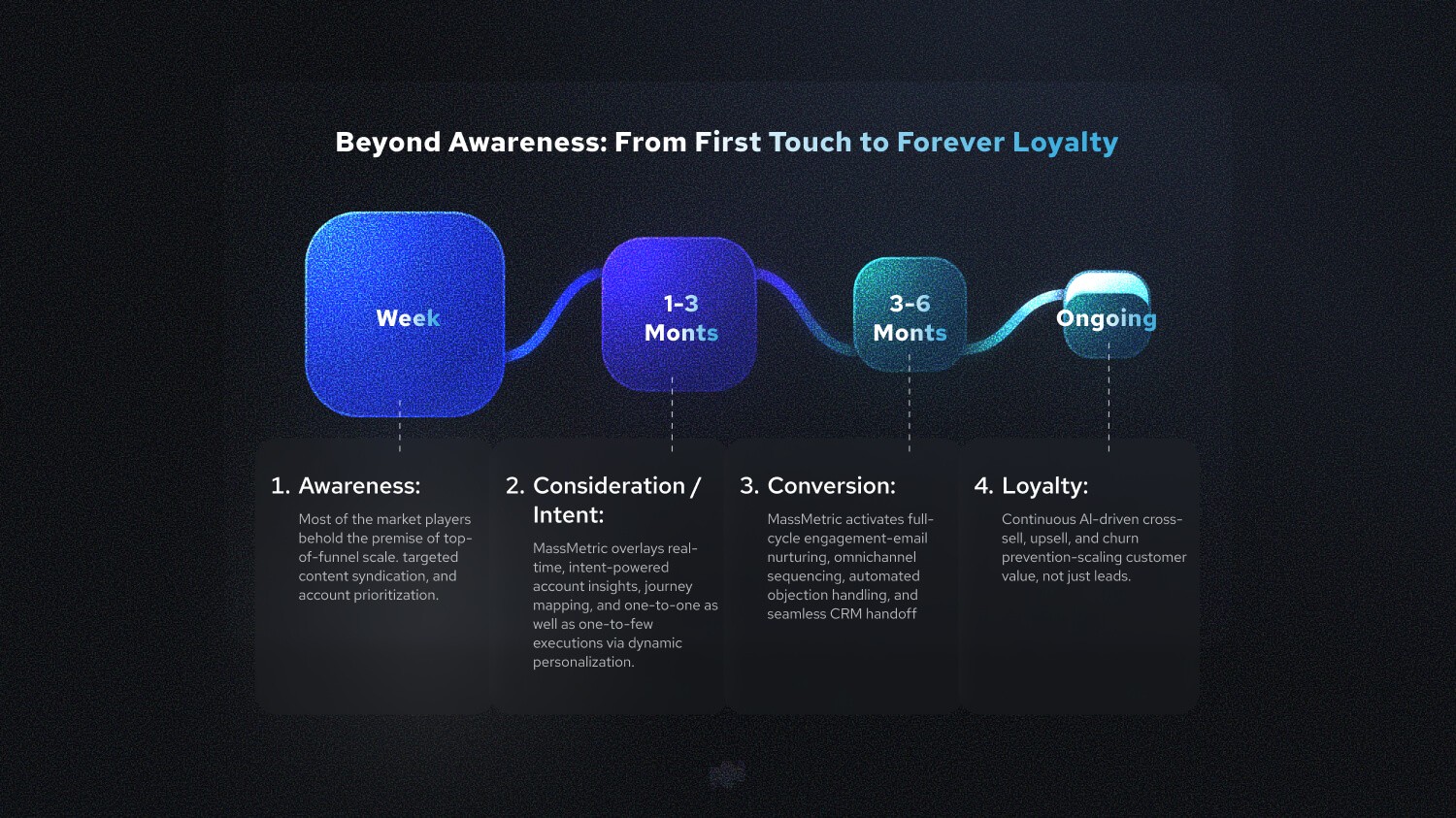
How to Build an Intelligent, Full-Funnel Growth Engine: An industry-agnostic approach to turning real-time buyer signals into predictable pipeline and revenue
Prelude
Budgets… they are tightening. Expectations… they keep rising. And the competition? It is fiercer than ever. If you are thinking traditional demand generation still cuts it in 2026, you would be mistaken. The game has changed fundamentally. Buyers are smarter, more informed, and frankly… less patient. They expect you to know them before they even fill out a form. And if you do not? They will move on to someone who does. This is where AI-powered strategies enter the picture, not as a nice-to-have, but as the new standard for survival. This blog explores how an AI-Powered B2B Demand Generation Strategy for 2026 can transform fragmented data, buyer signals, and automation into a single, always-on revenue engine for modern GTM teams.
Section 1: Architecture of an AI-Powered B2B Demand Generation Engine
The traditional funnel is obsolete. The linear progression of awareness to consideration to decision no longer reflects the chaotic reality of modern B2B buying journeys. Today, building a full-funnel B2B demand generation framework requires a fundamental re-architecture of your go-to-market stack. It is no longer about static campaigns; it is about constructing a living, breathing ecosystem that adapts in real time.
At the heart of this transformation lies the architecture of an AI-powered funnel. Unlike legacy models that rely on manual inputs and periodic updates, an AI-powered sales funnel is built on three critical, interconnected layers: the data layer, the intelligence layer, and the orchestration layer. The data layer is the foundation, ingesting first-party engagement data, third-party intent signals, and contextual market intelligence, while the intelligence layer converts that into patterns, buying-window predictions, and propensity-based account scoring.
The orchestration layer represents the evolution of B2B marketing automation, moving far beyond simple “if/then” triggers into autonomous orchestration where AI agents decide the next best action, channel, and message for every prospect and account. This industry-agnostic B2B demand generation model ensures that whether you sell SaaS, manufacturing equipment, or services, the system can learn and optimize continuously.
2026 Budget Priorities and Investment Trends
According to MassMetric research, 79% of marketers expect their budgets to increase in 2026, with much of that incremental spend directed toward AI and data infrastructure for B2B demand generation.
B2B leaders are shifting spend to AI-powered tools for content creation, distribution, and measurement as part of their 2026 plans.
Furthermore, enterprises implementing an AI-first B2B demand generation playbook see up to a 40% reduction in customer acquisition costs within the first year.
By integrating these layers, organizations move from reactive campaigns to proactive revenue systems, where sales feedback instantly informs marketing actions and marketing intelligence directly empowers sales conversations. This is the essence of an AI-powered B2B demand generation strategy for 2026: a unified engine where technology is the strategy.
Section 2: From Buyer Signals to Revenue Intelligence
In 2026, the difference between noise and revenue is intelligence. Intelligent lead generation is the discipline of decoding digital body language—webinar registrations, whitepaper downloads, reviews, social engagement—to separate passive interest from active demand. Revenue intelligence platforms aggregate these signals, apply AI models, and surface accounts with real intent instead of isolated leads.
An effective AI B2B lead generation strategy leans on AI tools for lead generation that use natural language processing and predictive analytics to understand why someone is acting, not just what they did. This shift replaces the old MQL model with account-based opportunity scoring, where AI-driven marketing insights for B2B demand generation evaluate the collective behavior of buying committees across an account.
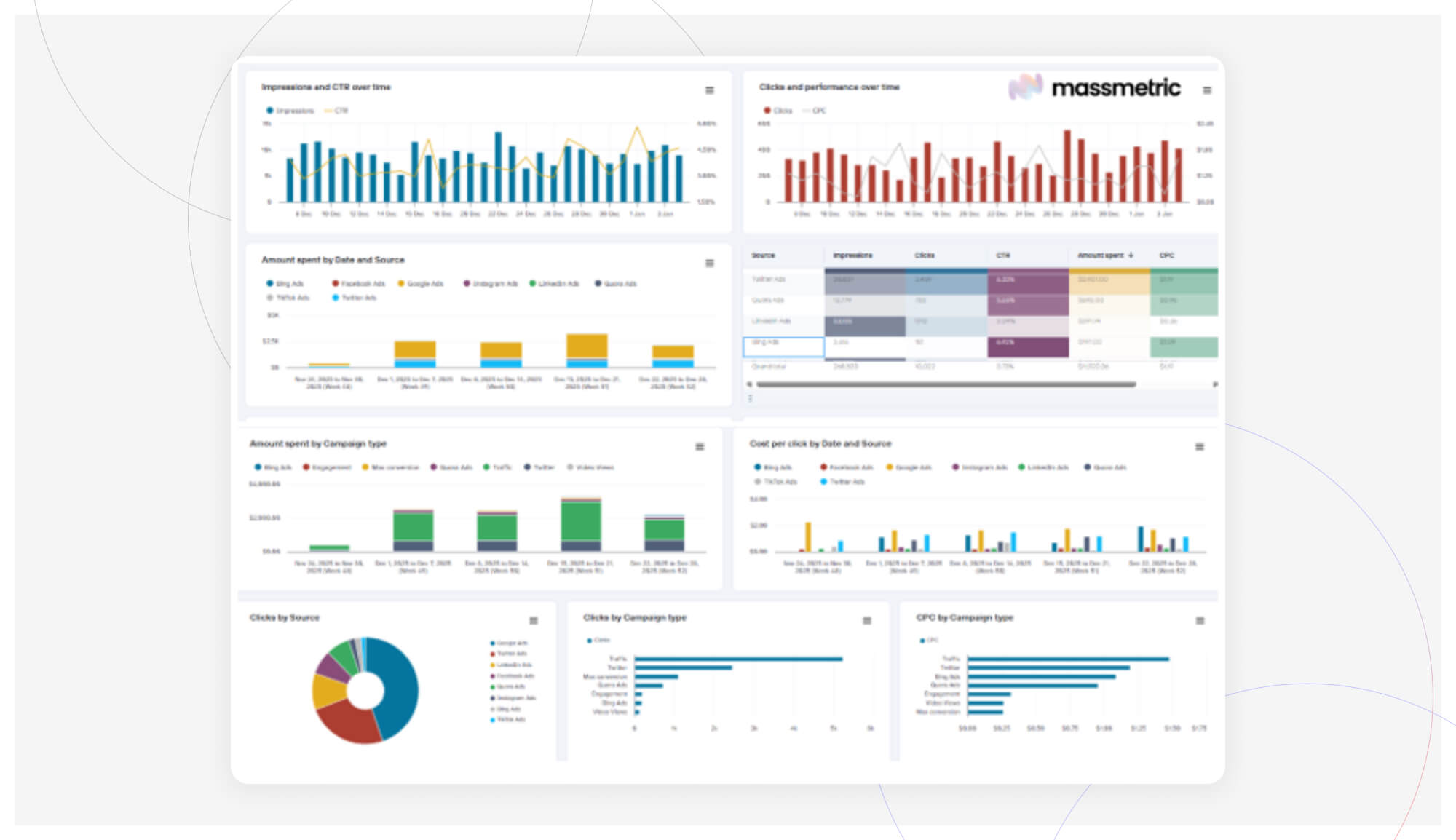
Figure 1: A modern B2B marketing automation dashboard visualizing cross-channel orchestration.
2026 Revenue Intelligence Benchmarks
Firms using AI in marketing and sales achieve 20–30% higher marketing campaign ROI and meaningful revenue uplift compared with peers that do not adopt AI, confirms a report by McKinsey.
According to MassMetric research, AI-powered personalization and predictive targeting rank among the top priorities for B2B marketing investment in 2026.
Furthermore, revenue intelligence platforms shorten complex B2B sales cycles by roughly 55% by surfacing the right contacts and next best actions at critical moments.
By unifying data streams into a single intelligence layer, AI-powered B2B demand generation gives revenue teams the ability to predict who is most likely to buy next and where to focus resource-intensive, human-led outreach.
Section 3: AI for Account-Based Marketing and Full-Funnel Personalization
If demand generation is the engine, account-based marketing (ABM) is the steering wheel. Historically, ABM was high-touch and difficult to scale, but AI for account-based marketing now enables account-based B2B demand generation with AI across hundreds or thousands of key accounts.
AI for B2B marketing personalization across the full funnel uses generative and predictive AI to assemble landing pages, emails, and creative variations tailored to a specific account’s industry context, pain points, and tech stack. It extends beyond token insertion into true narrative-level personalization, and it does this simultaneously for CFOs, CTOs, and users across the buying committee.
To see how this AI-first B2B demand generation playbook evolves, you can reference MassMetric’s perspective in “2025 and Beyond: The Era of AI-Native B2B Demand Generation Strategy as Gold Standard.”
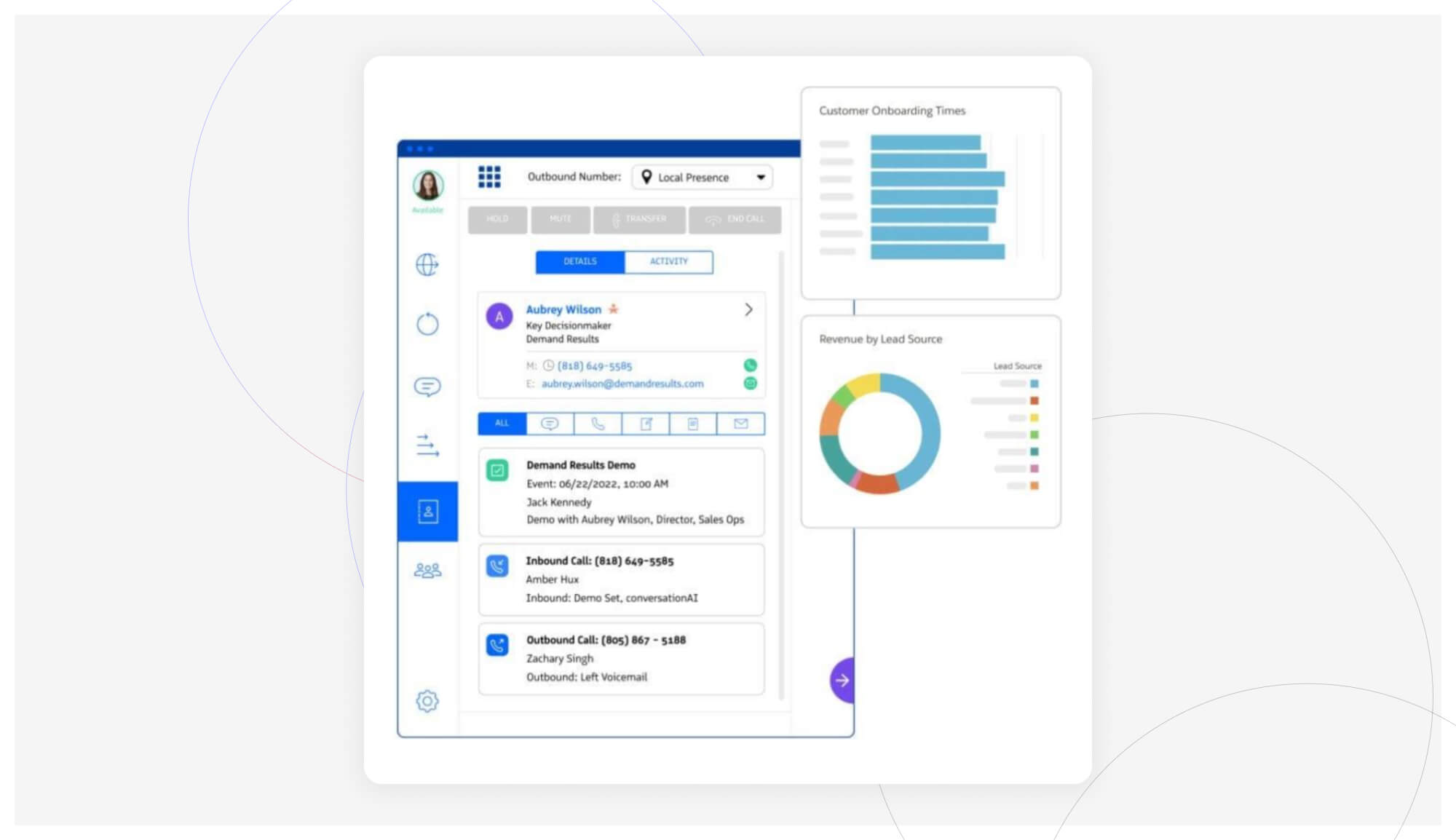
Figure 2: Revenue intelligence interface displaying real-time deal health and AI-predicted outcomes.
Personalization and ABM Impact
HubSpot’s 2025 marketing statistics show that dynamic email personalization can deliver up to a 44% lift in generated leads and deals.
The same dataset notes that 96% of marketers report personalization as a key driver of repeat business, underscoring its role in customer lifecycle management.
Industry ABM research finds that companies aligning ABM with account-based advertising typically achieve higher win rates and larger annual contract values; AI-enhanced ABM further amplifies this by enabling near real-time personalization at scale.
According to MassMetric research, AI-powered account-based personalization can lift engagement by as much as 150% versus static segmentation.
Hyper-personalization at this level transforms the buying experience from generic pitches to experiences where prospects feel understood long before speaking to a salesperson.
Section 4: Intelligent B2B Demand Generation for Complex Sales Cycles
Enterprise B2B demand generation for long sales cycles is a marathon. Multiple stakeholders enter and exit the journey over months, sometimes years, and intent can spike or fade with little visible pattern. Intelligent, data-driven B2B demand generation frameworks keep brands present and relevant throughout these “dark months.”
An AI-powered sales funnel for complex B2B deals tracks more than form fills; it reads cross-channel signals from entire buying committees, including dark social and off-site research. B2B demand generation for complex buying committees means that when a new executive stakeholder at a target account suddenly begins consuming competitor content, AI flags the risk and can trigger coordinated re-engagement plays.
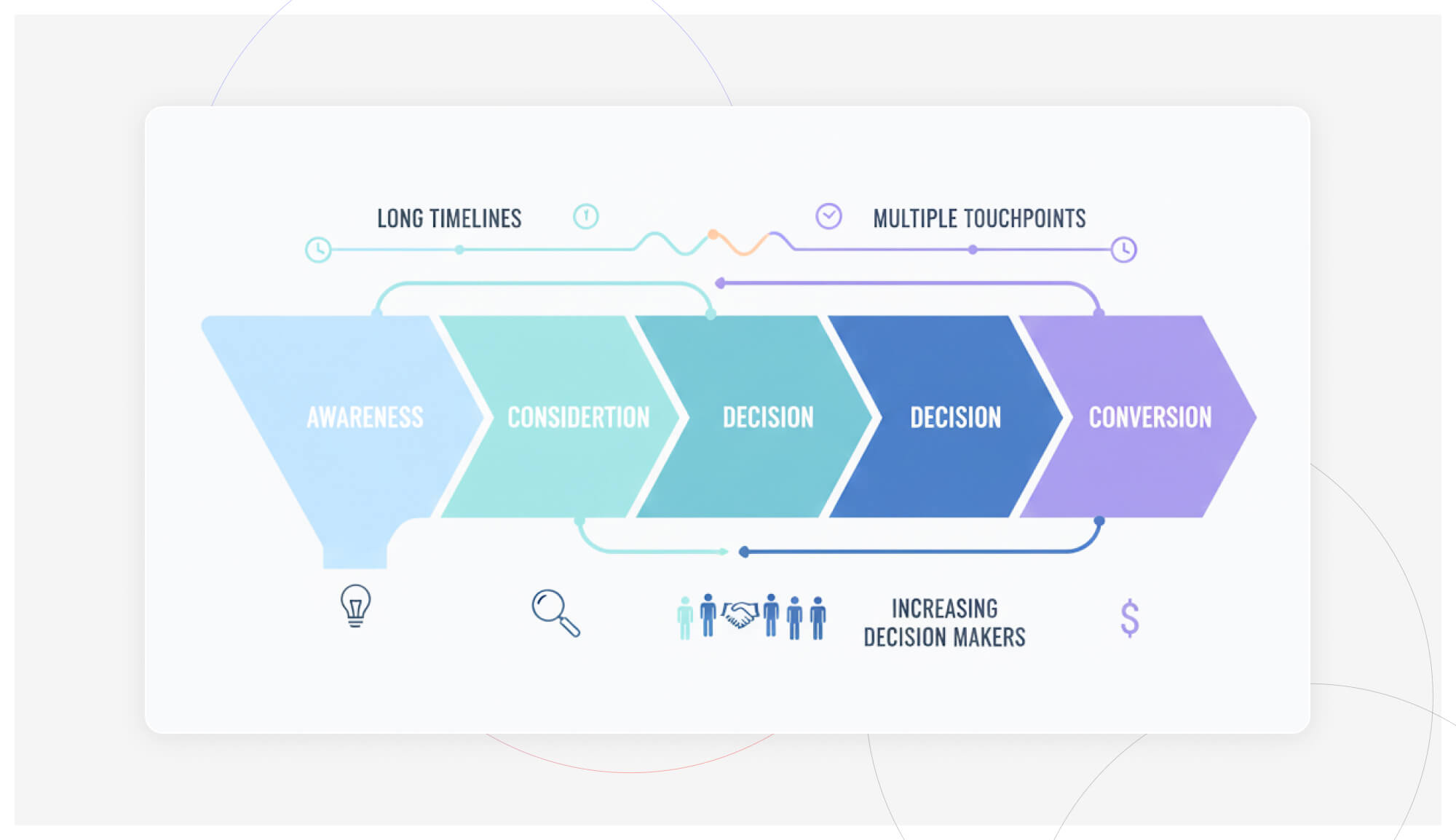
Figure 3: Illustration showing intelligent B2B demand generation with complex sales cycle benchmarks, including multiple stages, long timelines, and gradual lead conversion.
Complex Sales Cycle Benchmarks
Gartner highlights MQL-to-SQL conversion as one of the core pain points for B2B organizations, with the majority of companies struggling to move leads into qualified opportunity territory.
Many B2B brands cite intent data as a primary tactic to improve lead generation and nurturing effectiveness, especially in multi-stakeholder, multi-month sales cycles.
According to MassMetric research, B2B demand generation strategies tuned for long sales cycles sustain triple the engagement over 12+ months compared with generic drip programs.
By embracing adaptive, AI-driven orchestration, B2B demand generation teams can ensure that long cycles build cumulative trust and insight instead of fatigue and noise.
To deepen your understanding of how this strategy evolves, consider reading about 2025 and Beyond: The Era of AI-Native B2B Demand Generation Strategy as Gold Standard. The core principle remains: relevance drives revenue. AI for B2B marketing personalization across the full funnel ensures that relevance is maintained from the first impression to the final renewal.
Section 5: Measuring AI Marketing ROI and Building the 2026 Playbook
You cannot manage what you cannot measure. Measuring AI marketing ROI in B2B demand generation demands a move from vanity metrics to revenue-centric, time-aware indicators such as pipeline velocity, CAC-to-LTV ratio, revenue influence, and sales-cycle compression.
AI marketing ROI benchmarks for B2B demand generation teams rely on AI-driven attribution, which credits touchpoints across the account journey instead of over-indexing on first or last touch. This is critical for data-driven B2B demand generation for enterprise brands where podcasts, communities, and product usage shape decisions before a form is ever filled.
Building a 2026 playbook means putting experimentation, measurement, and feedback loops at the core. AI models improve as you loop back outcomes and performance, enabling the system to continuously reallocate spend, refine targeting, and update content based on what actually drives revenue.
AI Marketing ROI and Automation Benchmarks
Content Marketing Institute’s B2B Content and Marketing Trends report notes that roughly 87% of marketers feel confident in their ability to measure content marketing ROI, reflecting the maturation of analytics stacks.
Marketing automation, when properly implemented, has been shown to dramatically increase the number of qualified leads; Oracle’s marketing automation materials cite multi-hundred-percent lifts in lead volume and conversion when organizations fully deploy automation across their funnel.
ThunderBit’s analysis of marketing automation ROI highlights multi-year returns often exceeding 500%, particularly where automation is tied to revenue-focused KPIs rather than email volume.
According to MassMetric research, companies that implement comprehensive AI marketing ROI frameworks see approximately 25% faster pipeline velocity and around 30% better forecast accuracy.
Ultimately, the goal is a self-optimizing AI-native demand engine—learning from every interaction, recalibrating in real time, and compounding revenue performance over time.
For a deeper dive into the intelligence required for sales alignment, explore Orchestrating the Future of Sales: Intelligence as the New Imperative. Furthermore, building these ecosystems often requires strong partnerships; learn more about Empowering Agencies and Publishers with Trusted Strategic Partnerships.
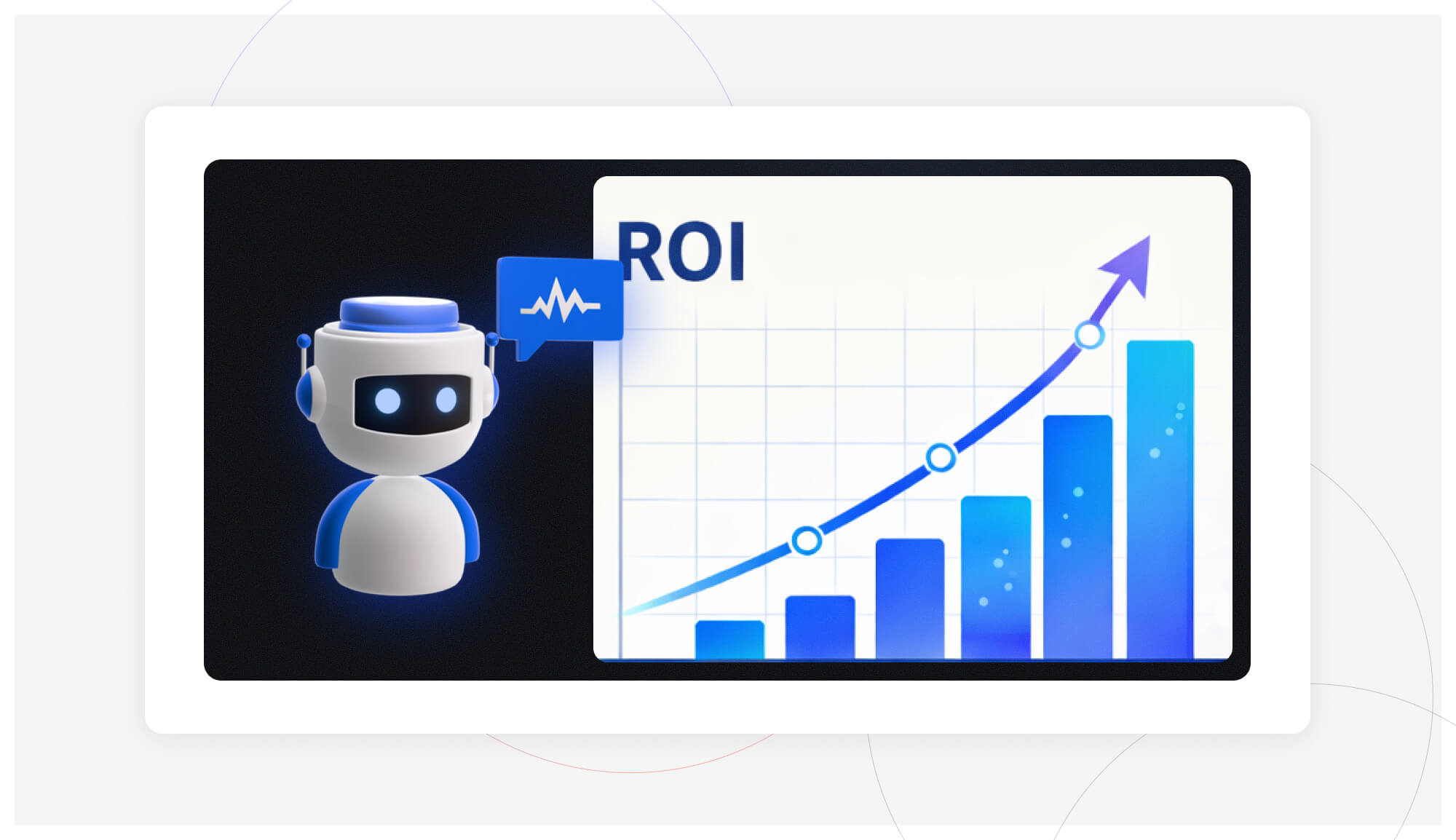
Figure 4: Illustration showing AI marketing ROI and automation benchmarks, highlighting improved performance, time savings, and measurable business growth.
Conclusion
The shift to an AI-powered B2B demand generation strategy for 2026 is not optional; it is existential. Precision is replacing volume, intelligence is replacing intuition, and personalization is replacing generic outreach. Organizations that integrate AI across their full-funnel B2B demand generation framework will be best positioned to deliver human-centric, highly relevant, and impeccably timed experiences that convert.
This philosophy underpins MassMetric. Since 2012, MassMetric has helped more than 500 enterprises and 100+ ISVs redefine growth, delivering up to 150% engagement lifts, 62% faster conversions, and a 95% client retention rate through AI-native, full-funnel B2B demand generation. MassMetric has been honored as:
GOLD STEVIE® WINNER – The Immaculate AI-Powered Demand Generation-as-a-Service (2025 Stevie® Awards for Technology Excellence)
SILVER STEVIE® WINNER – MassSignal, an omnichannel campaign engine powered by live data and predictive intelligence
BRONZE STEVIE® WINNER – MassMind: Score, the only proprietary, intelligent CRM powered by an indigenous LLM
Ready to move from guesswork to a growth engine? MassMetric’s AI-native platform is built to turn real-time buyer signals into predictable pipeline and revenue.
FAQs: Mastering AI in B2B Demand Generation
|