7 B2B Journey Mapping Trends Every Marketer Should Watch in 2026
Published:
|
By
MassMetric
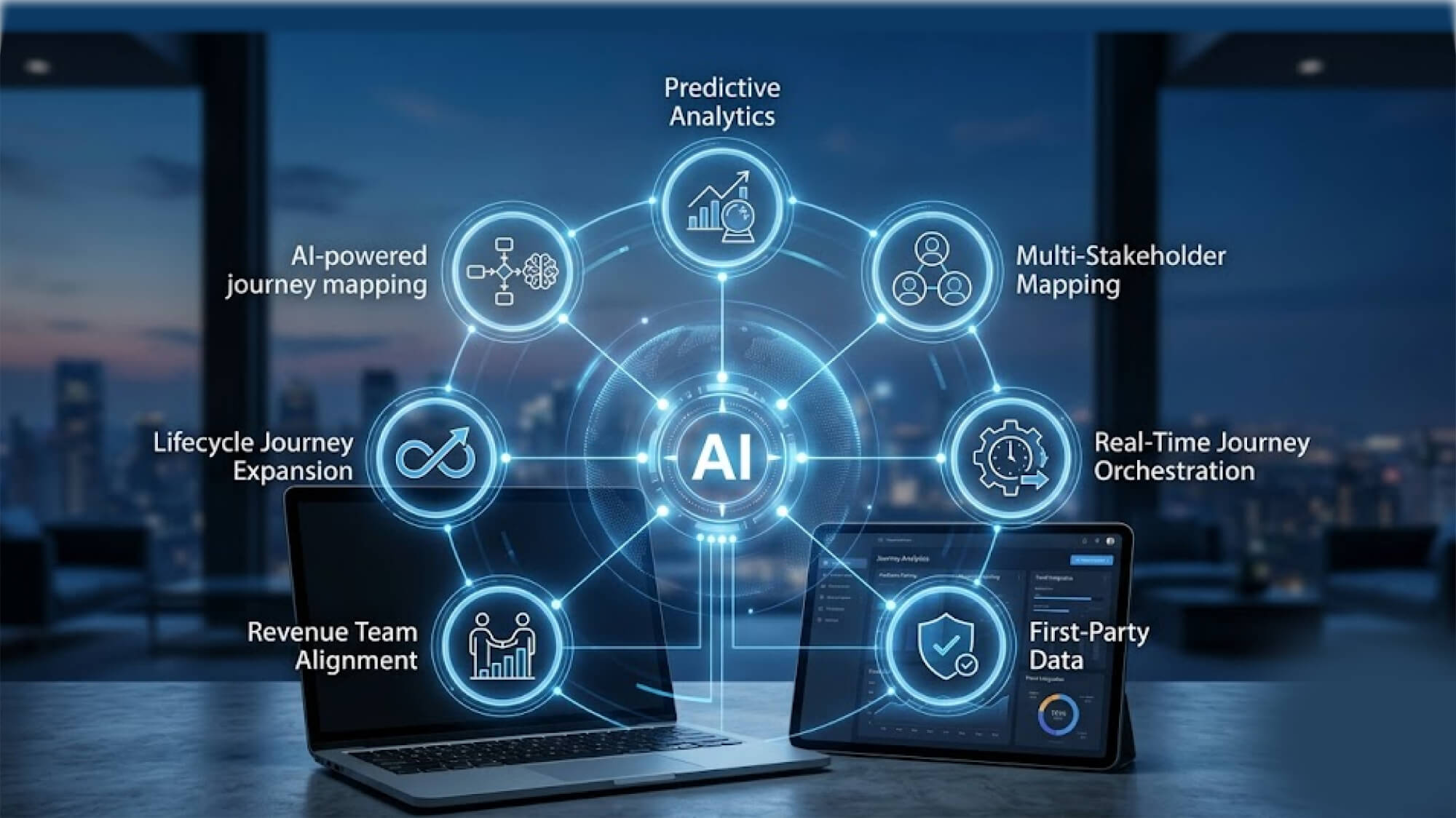
B2B buying journeys are no longer simple or predictable. Buyers now interact with brands across multiple channels, consume large amounts of content independently, and involve multiple stakeholders before making a purchase decision. The traditional customer journey map, often built on assumptions and updated occasionally, can no longer capture how modern buying works.
In 2026, successful organizations are using smarter, faster, and more data-driven approaches to journey mapping including AI-powered demand generation strategies. Technologies like AI journey mapping, predictive analytics, and real-time customer intelligence are helping marketing teams understand behavior with far greater accuracy.
In this article, we explore the most important B2B marketing trends shaping journey mapping in 2026 and how marketers can use them to create better customer experiences and improve conversions.
Why B2B Journey Mapping Matters More Than Ever in 2026
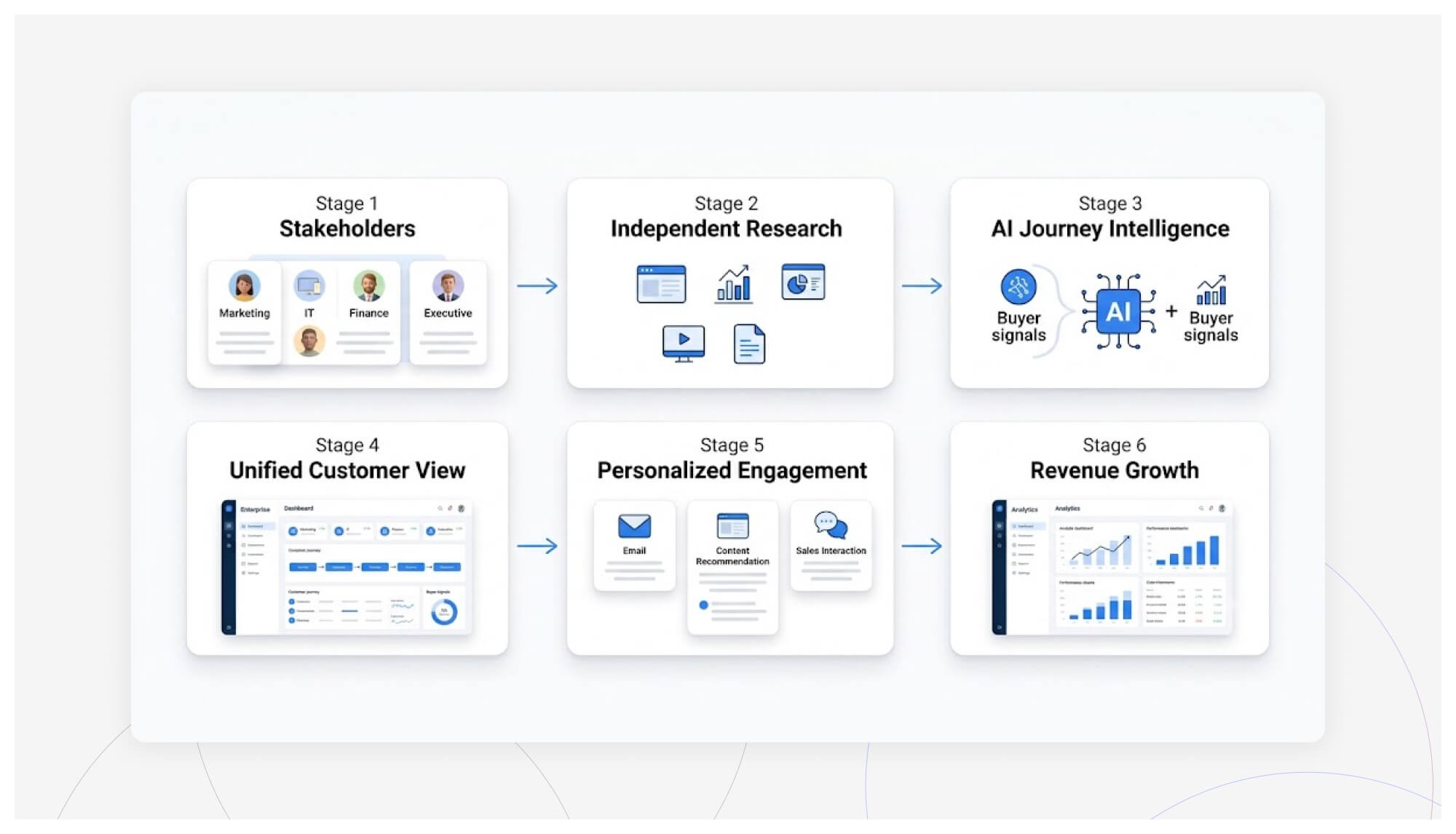
Modern B2B purchases usually involve six to ten stakeholders. Each person research independently, consumes different content, and has their own priorities.
This creates a major challenge for marketing and sales teams:
Buyers expect personalized experiences
Customer journeys constantly change
Static journey maps become outdated quickly
Teams struggle to track real buyer behavior
Organizations with accurate, real-time customer insights are winning more deals because they can engage buyers with better timing and relevance.
Trend #1: AI-Powered Journey Mapping Moves from Insight to Action
One of the biggest B2B marketing trends in 2026 is the rise of advanced AI journey mapping. Traditional journey mapping used to be a slow manual process involving spreadsheets, workshops, and customer interviews. By the time the map was completed, buyer behavior had often already changed.
AI changes this completely. AI-powered platforms now analyze large volumes of behavioral data automatically across:
Websites
Marketing automation platforms
CRM systems
Email campaigns
Social channels
Product interactions
Customer support platforms
Instead of relying on assumptions, marketers can now see the actual paths customers take.
What AI Journey Mapping Can Identify
AI systems can quickly detect:
High-converting content paths
Common drop-off points
Delayed buying stages
Friction in onboarding
Cross-channel behavior patterns
Signals of buying intent
This allows marketing teams to act immediately instead of waiting for quarterly reporting cycles.
Why This Trend Matters
AI journey mapping shortens the gap between insight and action.
Rather than spending weeks manually analyzing reports, teams can focus on:
Improving personalization
Optimizing campaigns
Removing conversion barriers
Increasing engagement quality
Supporting faster decision-making
The companies adopting AI-driven journey intelligence early are gaining a significant competitive advantage.
Trend #2: Predictive Analytics Becomes a Core Journey Mapping Capability
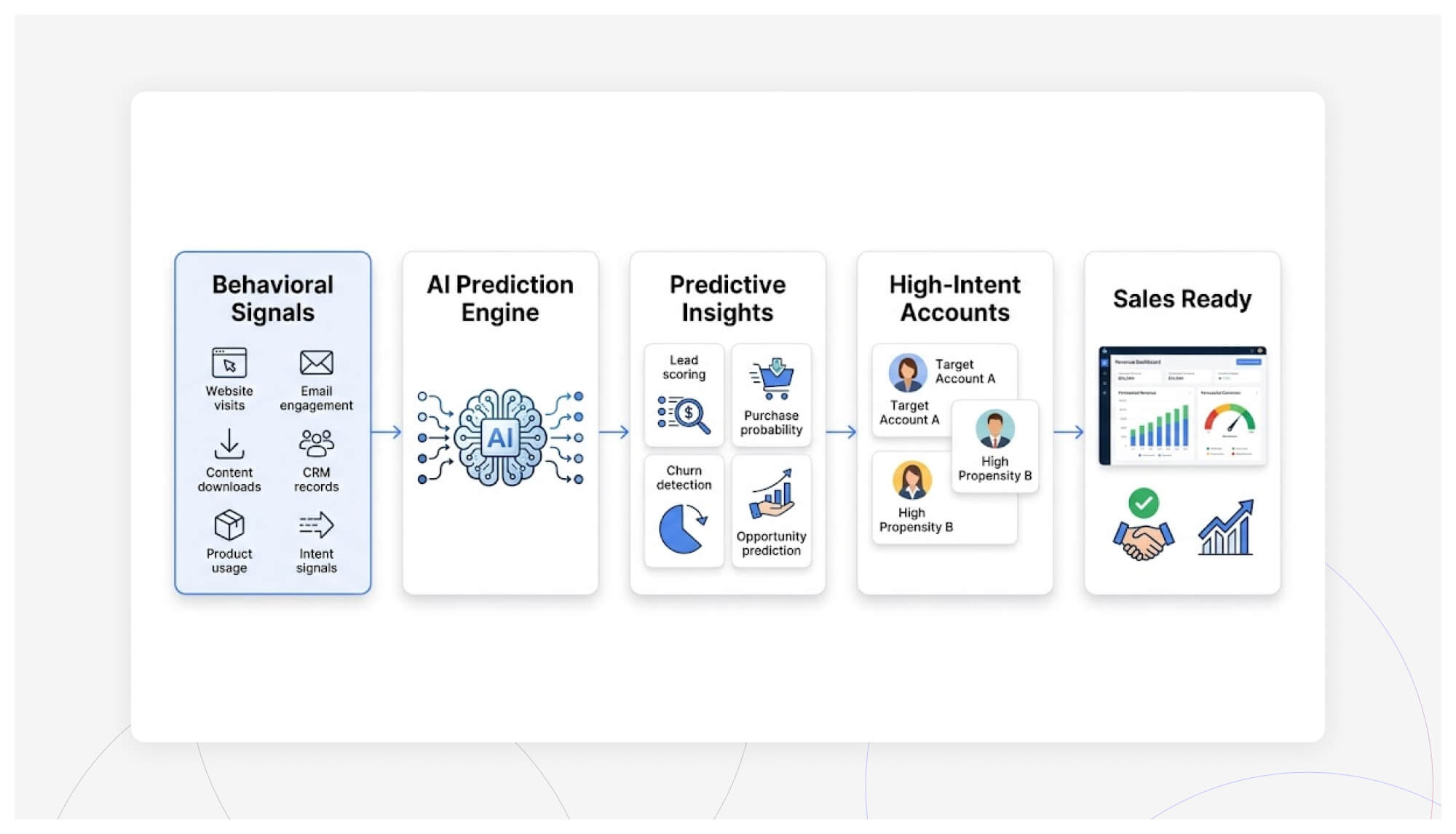
Another major transformation in 2026 is the growing role of predictive analytics in customer journey strategy. Understanding what customers already did is helpful. Predicting what they are likely to do next is far more valuable.
Predictive analytics uses machine learning models and historical customer data to forecast future behavior.
This includes signals such as:
Website engagement
Content downloads
Email interactions
Product usage behavior
Pipeline activity
Firmographic data
Intent signals
What Predictive Analytics Helps Marketers Do
Marketing and sales teams can now:
Prioritize high-intent accounts
Predict purchase readiness
Identify upsell opportunities
Detect churn risk early
Improve lead scoring
Personalize outreach timing
For example, if a customer repeatedly visits pricing pages and downloads solution-focused content, predictive models may flag them as sales-ready automatically.
Business Impact
The practical impact of predictive analytics is significant:
Higher conversion rates
Better sales efficiency
Reduced churn
Improved campaign ROI
Smarter allocation of marketing spends
Predictive insights allow organizations to move from reactive marketing to proactive customer engagement.
Trend #3: Multi-Stakeholder Journey Mapping Takes Center Stage
One of the biggest mistakes B2B companies still make is building their journey maps around only one buyer persona. In reality, B2B purchases involve entire buying committees. Each stakeholder has unique goals, concerns, and decision criteria.
For example:
Stakeholder | Primary Concern |
CFO | Cost and ROI |
IT Leader | Security and integration |
Procurement | Pricing and contracts |
End User | Usability and efficiency |
Department Head | Business outcomes |
A single generic journey map cannot effectively address all of these perspectives.
How Multi-Stakeholder Mapping Helps
Leading organizations now build separate journey experiences for:
Influencers
Decision-makers
Technical buyers
Procurement teams
Existing customers
This improves:
Content relevance
Sales conversations
Account-based marketing
Buying confidence
Conversion speed
Why It Matters
When every stakeholder receives messaging aligned to their priorities, organizations reduce friction throughout the buying process. Deals move faster because concerns are addressed earlier.
Trend #4: Real-Time Journey Orchestration Replaces Static Maps
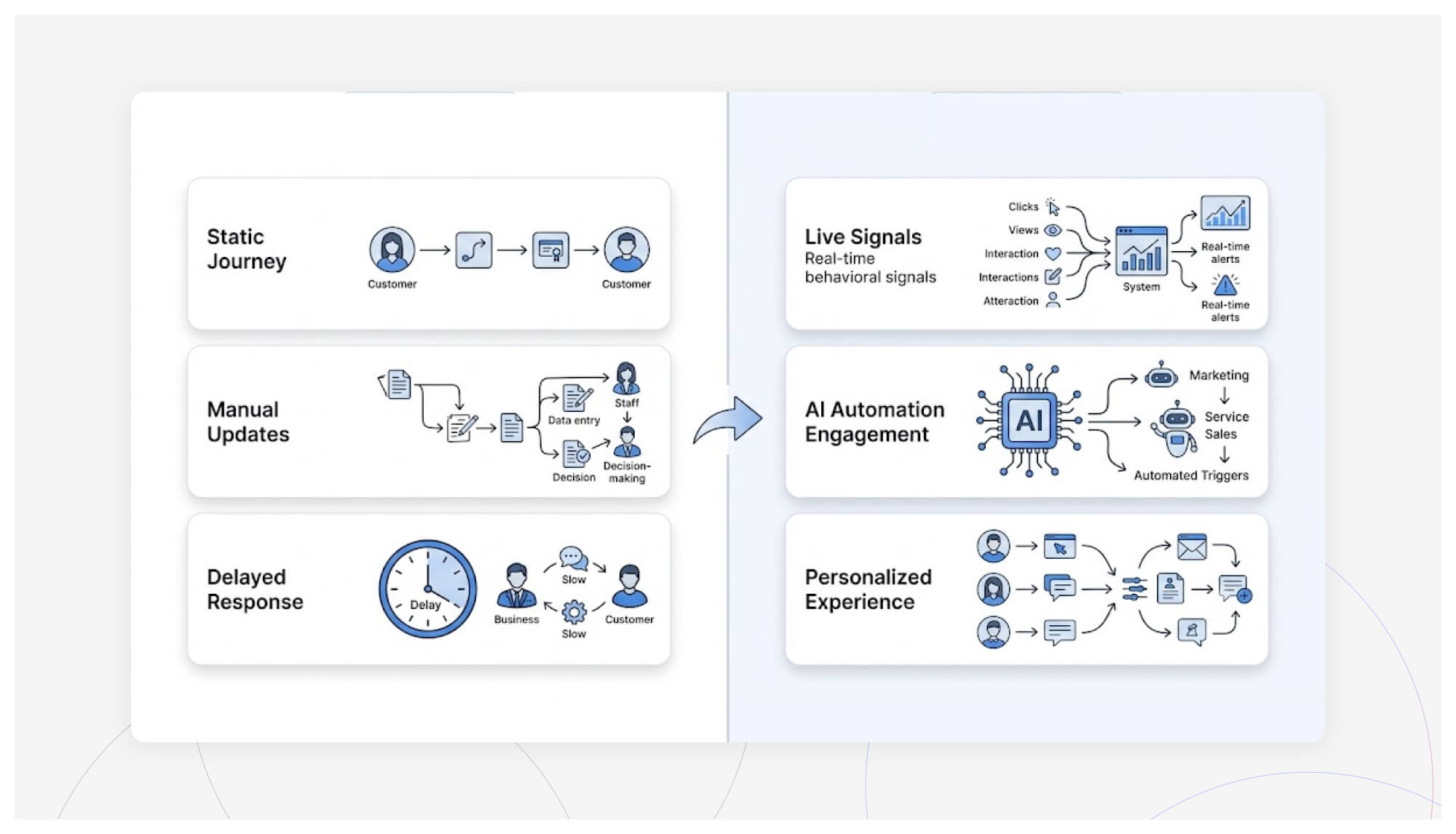
Static journey maps are quickly becoming outdated. Modern customer behavior changes constantly. Buyers shift channels, revisit research stages, and engage unpredictably.
That is why companies are adopting real-time journey orchestration systems.
These systems continuously update customer journeys based on live behavioral signals.
Real-Time Journey Orchestration Enables
Triggered email workflows
Dynamic content recommendations
Personalized website experiences
Automated nurture sequences
Intent-based engagement
Cross-channel automation
For example, if a buyer attends a webinar and later revisits a solution page, the system can automatically deliver relevant follow-up content within minutes.
AI’s Role in Orchestration
AI continuously evaluates which touchpoints improve conversions and which sequences produce stronger outcomes. This helps marketers optimize customer experiences automatically at scale. The result is a far more responsive marketing system that adapts as quickly as buyers do.
Trend #5: First-Party Data Becomes the Foundation of Journey Intelligence
Privacy regulations and the decline of third-party cookies are changing how marketers collect data. In response, businesses are investing heavily in first-party data strategies.
First-party data comes directly from customer interactions such as:
CRM records
Website visits
Product usage
Customer surveys
Sales conversations
Email engagement
Support interactions
Why First-Party Data Matters
First-party data offers several advantages:
Higher accuracy
Better personalization
Stronger privacy compliance
More reliable targeting
Greater customer trust
Unlike purchased third-party data, first-party insights reflect real customer behavior and actual engagement patterns.
Competitive Advantage
Organizations with strong first-party data ecosystems are building more accurate customer journeys and delivering better experiences across every touchpoint. This trend will continue accelerating throughout 2026 and beyond.
Trend #6: Revenue Teams Align Around Shared Journey Insights
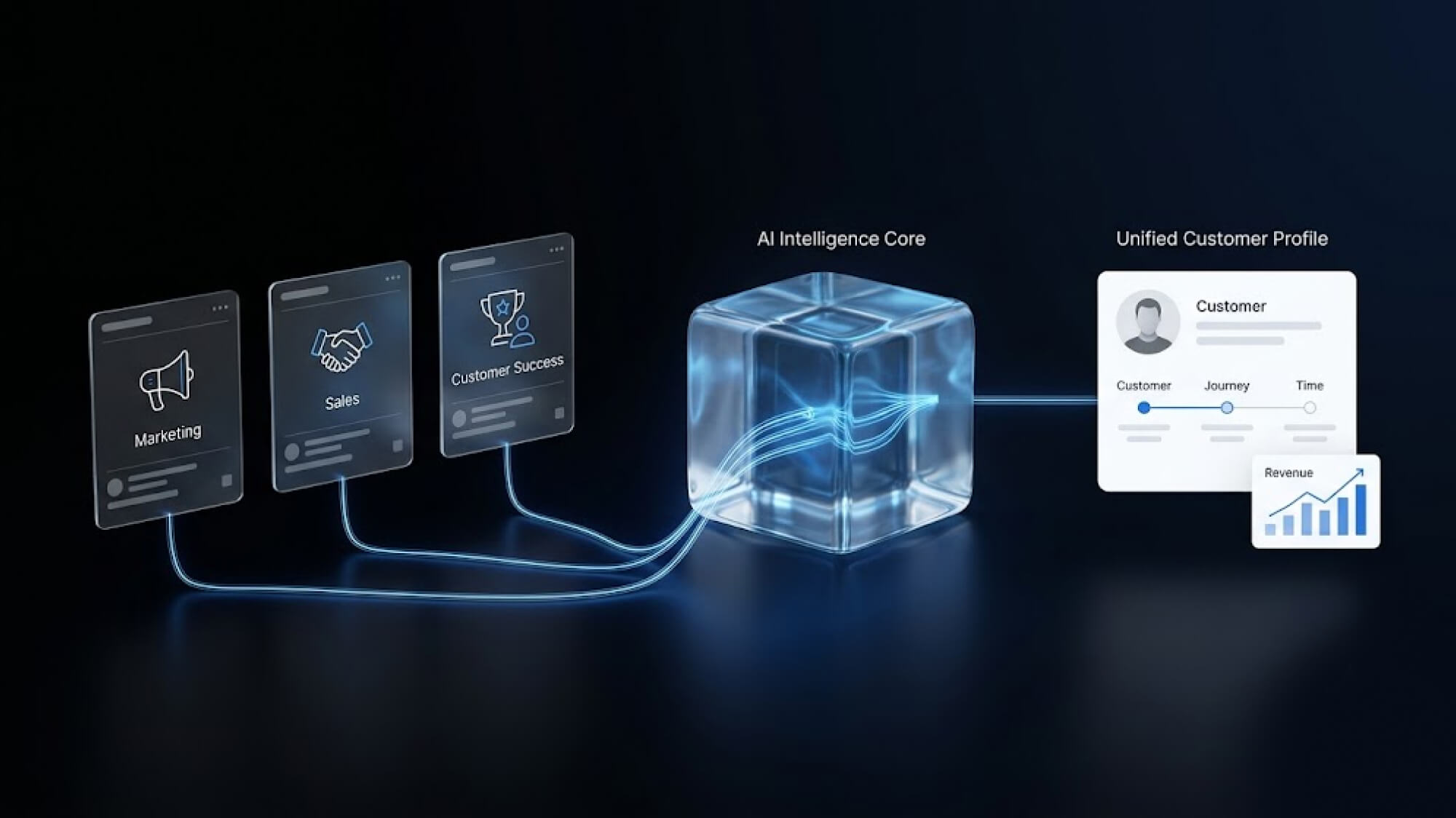
Another important shift in modern B2B organizations is the alignment between:
Marketing
Sales
Customer success
Historically, each department worked from separate platforms and separate customer insights. This created problems such as:
Inconsistent messaging
Disconnected follow-ups
Poor customer experiences
Misaligned priorities
Today, journey mapping is becoming a shared operational framework.
Benefits of Shared Journey Intelligence
When teams work from the same customer insights, they can:
Coordinate communication
Improve sales handoffs
Detect stalled opportunities faster
Deliver more personalized engagement
Strengthen customer retention
This creates a smoother customer experience throughout the entire lifecycle.
Why Alignment Matters
Consistent engagement builds trust. Customers are more likely to renew and expand relationships when every interaction feels connected and informed.
Trend #7: Journey Mapping Expands Beyond Acquisition
Traditional journey mapping focused heavily on lead generation and sales conversion. In 2026, companies are extending journey mapping across the full customer lifecycle.
This includes:
Onboarding
Product adoption
Renewal
Retention
Upselling
Advocacy
Why Post-Sale Journey Mapping Matters
Existing customers represent one of the largest revenue opportunities for B2B organizations.
Journey analytics can help teams identify:
Which onboarding paths increase adoption
Which customers may churn
Which behaviors predict expansion
Which users are likely to become advocates
Long-Term Business Value
Companies that optimize post-sale experiences improve:
Customer lifetime value
Product adoption
Retention rates
Upsell revenue
Brand advocacy
Journey mapping is no longer a marketing-only activity. It has become a full lifecycle growth strategy.
How Marketers Can Prepare for These Trends
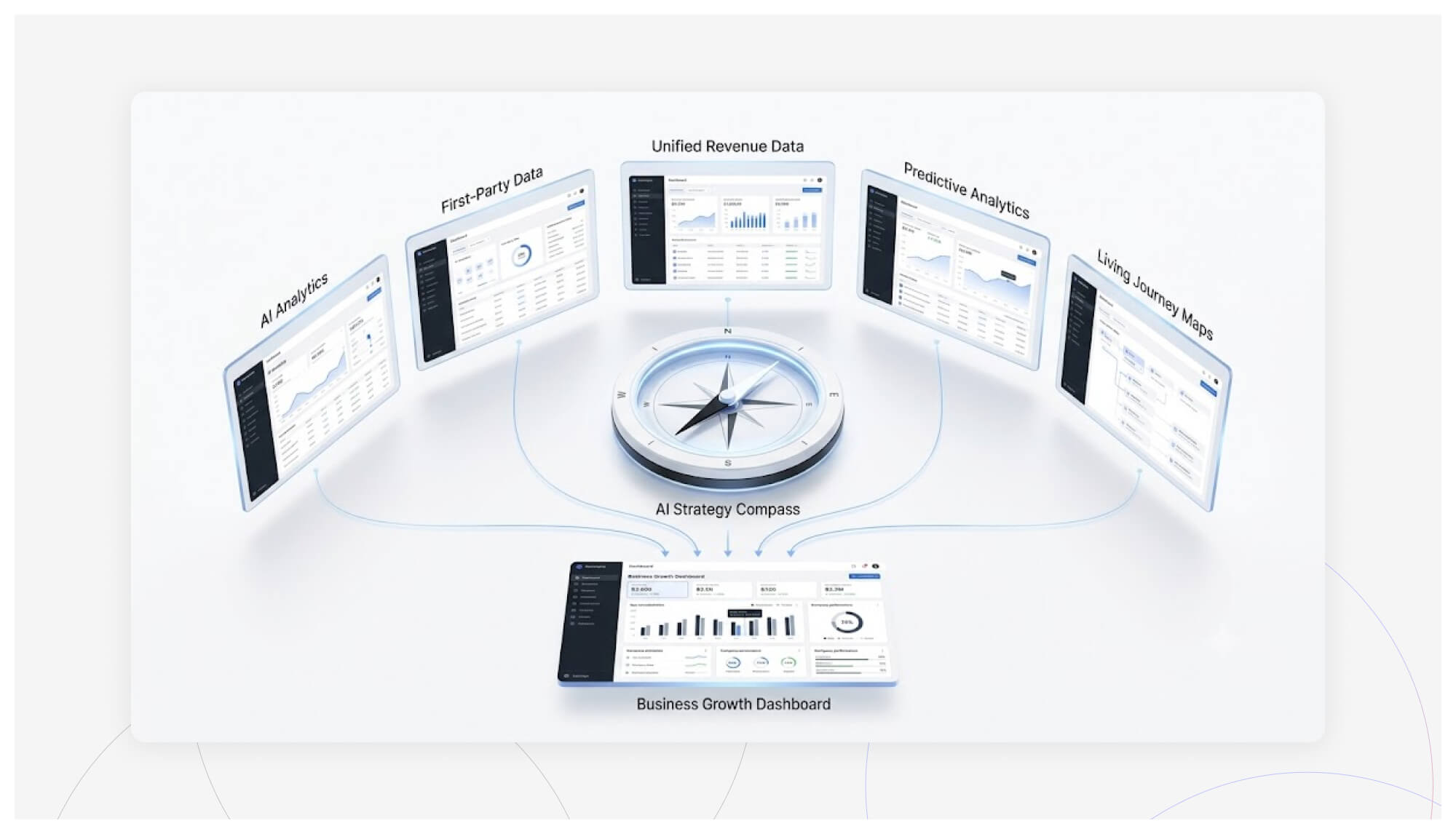
To stay competitive in 2026, marketers should focus on five key priorities.
1. Invest in AI-Powered Analytics
Use modern platforms capable of processing real-time behavioral data and generating actionable customer insights automatically.
2. Build a Strong First-Party Data Strategy
Focus on collecting accurate customer data from owned channels instead of relying heavily on third-party sources.
3. Connect Revenue Team Data
Integrate marketing, sales, and customer success data into a single customer view.
4. Adopt Predictive Analytics
Use predictive models to forecast customer behavior and improve decision-making.
5. Treat Journey Maps as Living Assets
Continuously update journey insights based on real customer interactions.
The Future of B2B Journey Mapping
Journey mapping is evolving into a real-time, AI-powered discipline driven by data, automation, and predictive intelligence. The companies winning in 2026 are not necessarily the ones with the largest marketing budgets. They are the organizations that understand buyers more accurately and respond faster to changing customer behavior.
The biggest B2B marketing trends all point toward the same future:
Smarter personalization
Real-time engagement
Predictive intelligence
Cross-functional alignment
Data-driven customer experiences
Organizations that embrace AI journey mapping and predictive analytics will be better positioned to improve conversions, strengthen retention, and create lasting competitive advantages.
How MassMetric Helps B2B Teams Modernize Journey Mapping
Massmetric helps B2B organizations transform customer journey mapping through AI-driven insights, predictive analytics, and real-time customer intelligence. If your current journey mapping strategy still relies on assumptions instead of live customer behavior, now is the time to rethink what is possible.
Frequently Asked Questions
|