AI‑Optimized OTT Advertising: Smarter Campaigns for 2026
Published:
|
By
MassMetric

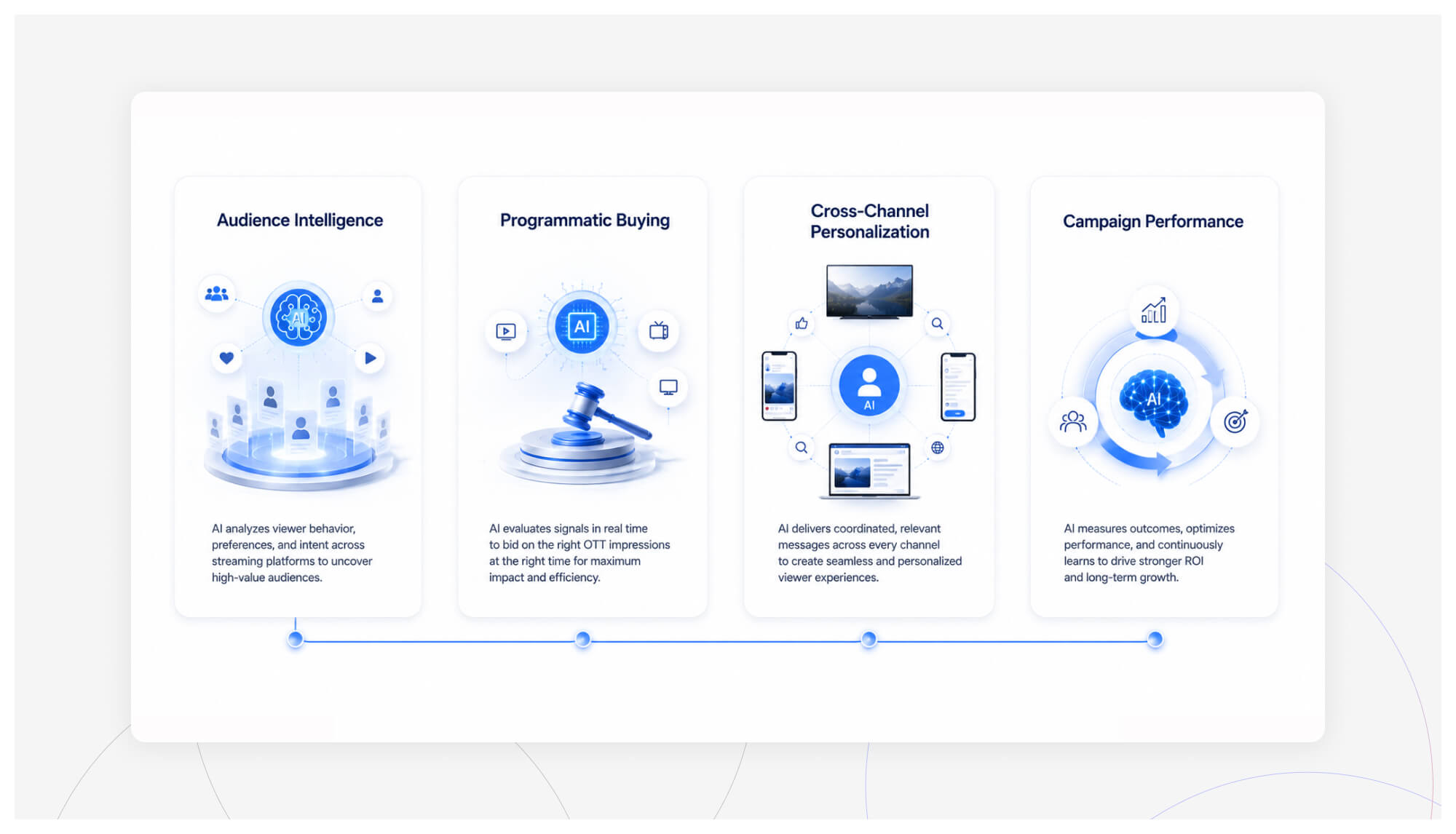
Streaming has surpassed cable as the primary way people consume content. OTT platforms are taking up more space in digital media plans, and leading brands are approaching it with more intention than simple audience migration. They are using artificial intelligence to anticipate audience behavior and deliver messages at the right time across every device.
This guide explores the key components of AI OTT advertising, including programmatic buying, predictive targeting, cross-channel personalization, and ROI measurement. Whether you are improving an existing strategy or building one from the ground up, understanding how AI supports each stage of the campaign lifecycle is essential for consistent performance.
What Is AI OTT Advertising?
OTT advertising refers to ads delivered through internet-connected streaming platforms rather than traditional cable or broadcast television. AI OTT advertising applies machine learning to optimize how these campaigns are planned, delivered, and improved over time.
From Static Segments to Behavioral Intelligence
Traditional OTT campaigns relied on limited audience data such as age, location, and household income. AI expands this approach by incorporating deeper insights.
Viewing behavior and watch patterns
Time of day engagement
Device and platform usage
Interaction with previous ads
Instead of targeting broad groups, brands can engage in micro-audiences based on actual behavior.
Continuous Campaign Improvement
AI-driven campaigns do not remain static. Performance signals are constantly analyzed, and adjustments are made automatically across targeting, bidding, and creative delivery.
This results in:
Faster optimization cycles
Reduced wasted spend
Better audience alignment
AI changes OTT advertising from a fixed campaign structure into a system that improves every interaction.
Connected TV Ads and Programmatic Buying
Connected TV advertising combines high-quality streaming content with digital targeting precision. Every impression provides data that can be used to refine decision-making.
Understanding Programmatic OTT
Programmatic OTT uses automated systems to purchase ad inventory in real time. Instead of booking placements in advance, the system evaluates each impression as it becomes available.
How It Works in Practice
When an impression opportunity appears, the system quickly assesses:
Audience match
Context of the content
Likelihood of engagement
Based on this, it decides whether to bid and how much to spend.
Key Benefits
Ability to scale campaigns across multiple platforms
Faster reaction to performance changes
Improved cost efficiency through smart bidding
Strategic Shift for Advertisers
OTT advertising was once treated as a branding exercise with limited measurement. Programmatic buying changes this perception. Advertisers gain performance-level insights like other digital channels, making OTT a measurable and accountable part of the media mix.
Predictive Ad Targeting
Predictive targeting is one of the most valuable applications of AI in OTT advertising. It enables brands to reach audiences before they actively begin searching or making decisions.
Moving Beyond Current Behavior
Traditional targeting focuses on what users are doing now. Predictive targeting focuses on what they are likely to do next.
For example:
A viewer watching fitness content consistently may soon be interested in health products
Someone engaging with automotive reviews might be entering the purchase phase
These signals allow brands to engage earlier in the decision journey.
Data Behind Prediction
Predictive models rely on multiple types of data:
First-party customer data
Behavioral signals from streaming platforms
Contextual data about the content being watched
These inputs are analyzed together to form a clear picture of potential intent.
Advantages for Brands
Higher engagement due to relevance
Lower cost per acquisition
Earlier influence on purchasing decisions
Cross-Channel Personalization
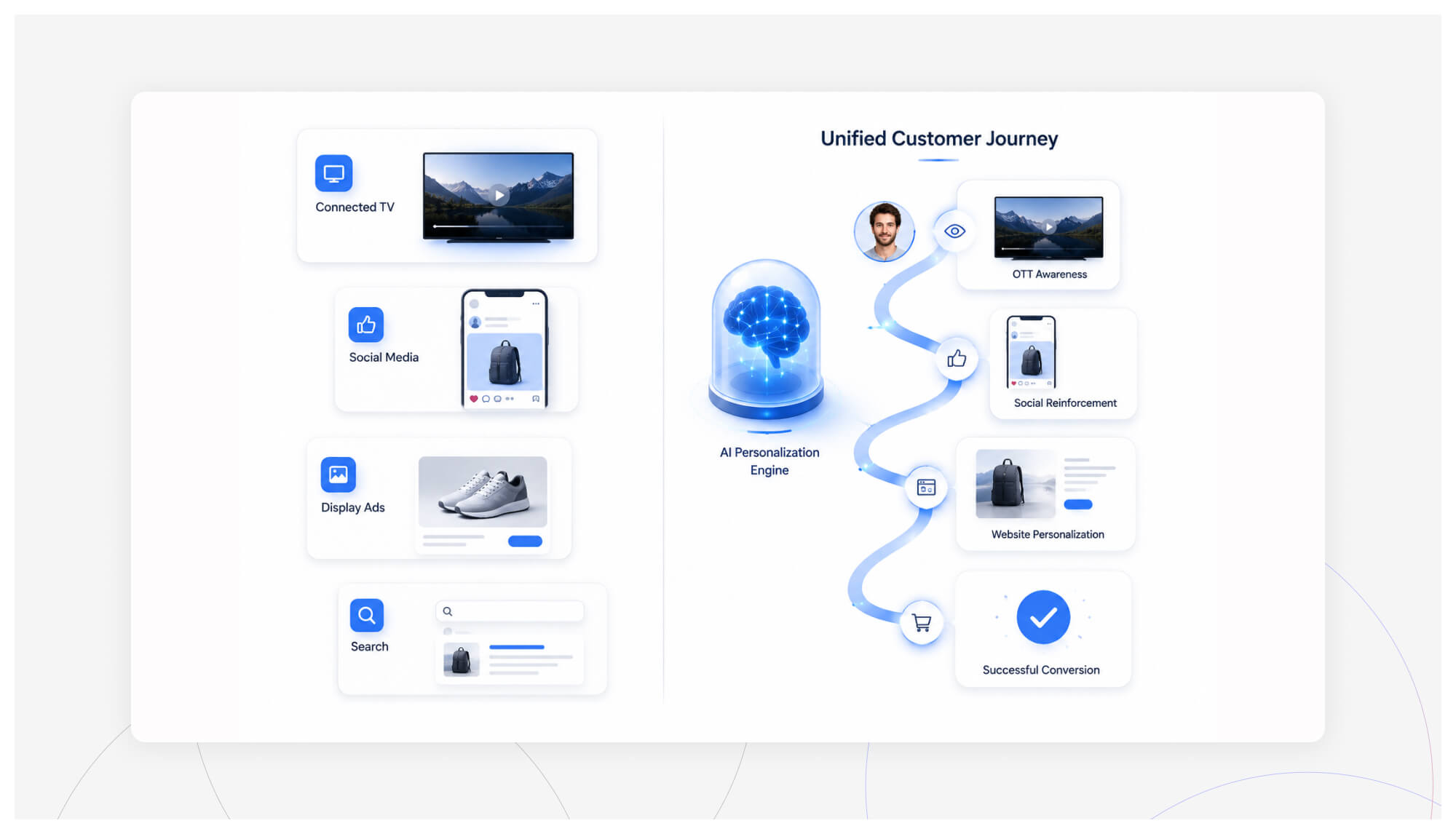
Consumers interact with brands across several digital environments. They might see a TV ad in the evening, browse social media later, and search for the brand the next day.
1.Unified Customer Journey
AI helps unify these touchpoints into a structured experience.
OTT builds awareness
Social media reinforces messaging
Display and search support conversion
Rather than repeating the same ad, each touchpoint builds on the previous one.
2.Dynamic Creative Optimization
AI systems generate and test multiple creative versions, delivering the most effective variation to each audience segment.
Elements That Can Change
Headlines and messaging
Visual style and imagery
Calls to action
3.Why Personalization Matters
Reduces repetitive messaging
Improves engagement rates
Creates a consistent brand experience
AI Marketing Automation
OTT campaigns involve multiple layers, including audience segments, platforms, creatives, and budgets. Managing these manually can slow down performance.
Automating the Execution Layer
AI automation tools handle repeated decision-making tasks such as:
Segment refinement based on performance
Budget allocation across platforms
Creative rotation based on engagement
Intelligent Frequency Control
Instead of using a fixed exposure limit, AI adjusts frequency based on:
Audience behavior
Stage in the buying journey
Ad performance trends
Benefits for Marketing Teams
Reduced manual workload
Faster campaign adjustments
Better use of time for strategy and planning
Automation allows teams to focus on creative direction and business growth rather than operational tasks.
Measuring Digital Advertising ROI
Measuring ROI in OTT advertising is complex because users interact across multiple devices and timeframes.
The Challenge of Attribution
A user might:
Watch an OTT ad on TV
Search for the brand later
Make a purchase through mobile
Linking these actions requires advanced tracking methods.
Multi-Touch Attribution
AI assigns value to each interaction in the customer journey instead of relying on last-click attribution.
Metrics That Matter
Reach and frequency across audience segments
Video completion rates
Conversion rates across devices
Additional Measurement Insights
Incremental lift compared to control groups
Lifetime value of acquired customers
Real-Time Performance Signals
AI identifies trends early in campaign performance, helping marketers refine strategies before the campaign ends.
The Future of OTT Advertising
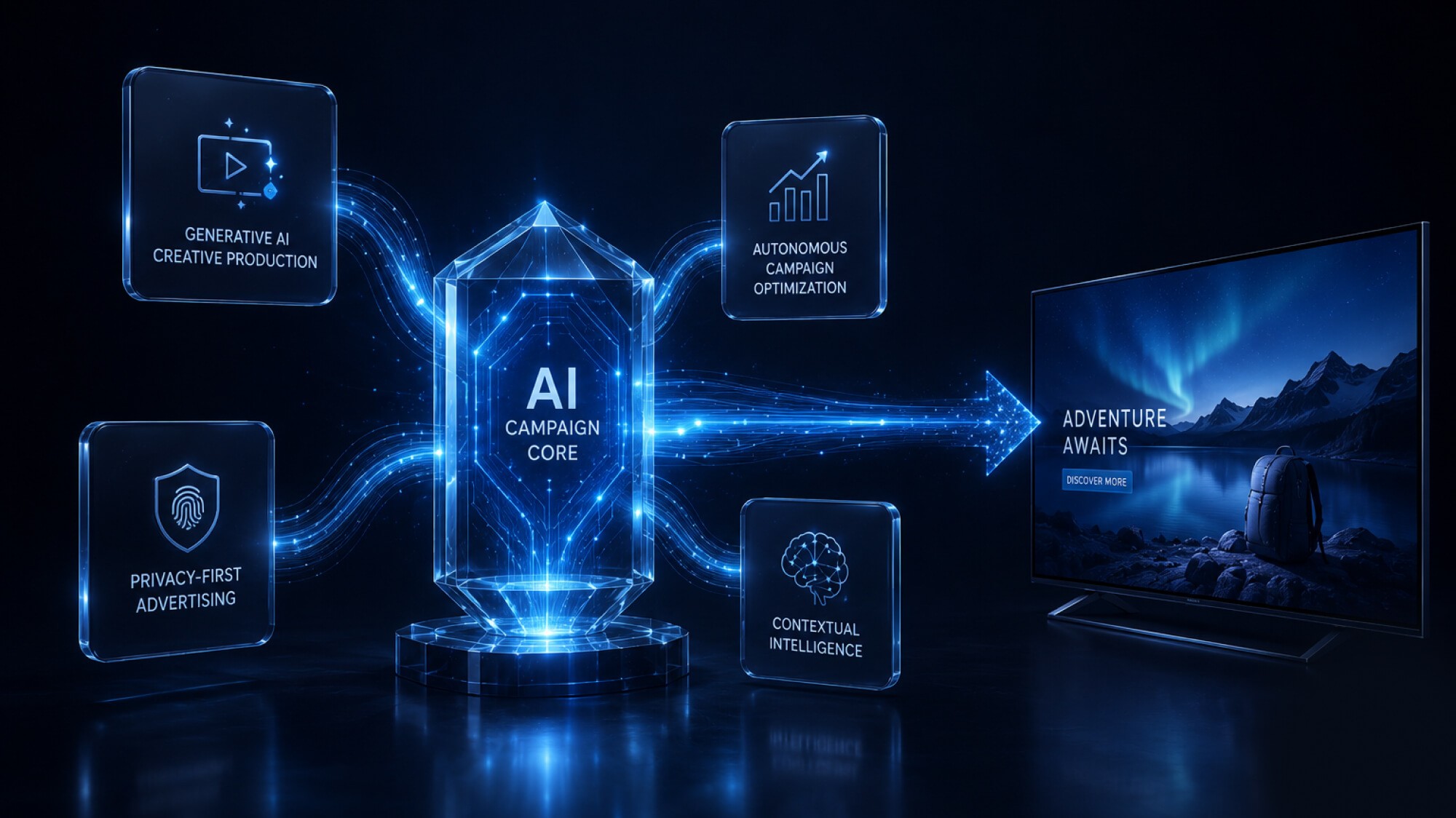
OTT advertising is evolving toward greater automation, deeper personalization, and privacy-conscious targeting.
1.Generative AI and Creative Production
AI is now capable of creating multiple ad variations in real time. This reduces dependence on fixed creatives and allows faster experimentation.
2.Autonomous Campaign Systems
Campaigns are increasingly managed by AI systems that handle:
Bidding strategies
Budget pacing
Creative selection
Human teams provide oversight and strategic direction.
3.Privacy-First Advertising
With growing regulations, brands are adapting by focusing on:
First-party data collection
Consent-based targeting
Contextual advertising
4.Contextual Intelligence
AI can analyze what viewers are watching and deliver ads that match the content, improving relevance without relying on personal identifiers.
Building Smarter OTT Campaigns
Successful OTT strategies are built on strong foundations that combine data, technology, and creative execution.
Core Elements of High-Performance Campaigns
Clear audience segmentation
Consistent messaging across channels
Real-time performance tracking
Integrated AI Approach
Bringing together predictive targeting, automation, personalization, and programmatic buying creates a complete system.
Outcomes of Integrated Campaigns
Higher engagement levels
Better budget efficiency
Stronger conversion performance
OTT advertising provides the opportunity. AI determines how effectively that opportunity is used.
Conclusion
AI OTT advertising has become a critical component of digital marketing. It enables brands to deliver relevant messages, improve targeting precision, and measure outcomes across complex user journeys. Campaigns that integrate predictive targeting, programmatic buying, personalized messaging, and automated execution consistently outperform traditional approaches.
At the same time, OTT does not operate in isolation. A strong digital strategy connects streaming campaigns with search, social media, analytics, and performance marketing efforts.
Massmetric supports businesses through demand generation, content syndication, AI‑powered campaigns, and B2C performance marketing. These services work alongside OTT advertising to expand reach, attract qualified audiences, and drive measurable growth across the full customer journey.
Frequently Asked Questions
|