AI‑Powered B2B Demand Generation Framework for Scalable Sales Growth
Published:
|
By
MassMetric
B2B demand generation is no longer as simple as running campaigns and handing leads over to sales. The way B2B buyers research solutions and make decisions has changed. Buyers now spend considerable time researching solutions on their own, comparing options, and building opinions before they ever respond to outreach. By the time a conversation happens, much of the decision-making is already in motion, which makes many traditional demand generation services feel slow and disconnected from how buyers behave.
At the same time, competition across digital channels is making it harder to stand out. Costs are rising, organic reach is shrinking, and targeting has become more precise across the board. This is why AI-Powered B2B Marketing Services are becoming central to modern growth strategies. They help businesses identify intent earlier, adapt campaigns based on real signals, and engage buyers in a more relevant way. Companies that rethink their B2B demand generation Services approach using AI are better positioned to build scalable and predictable sales pipelines, rather than relying on outdated demand generation services that struggle to keep up.
Understanding B2B Demand Generation in 2026
What B2B Demand Generation Really Means
B2B demand generation today is about creating interest, shaping buyer perception, and moving prospects toward a decision over time. It goes beyond isolated campaigns and focuses on building a consistent pipeline by engaging buyers early, often before they actively start evaluating vendors.
Demand Generation vs Lead Generation: Why the Difference Matters
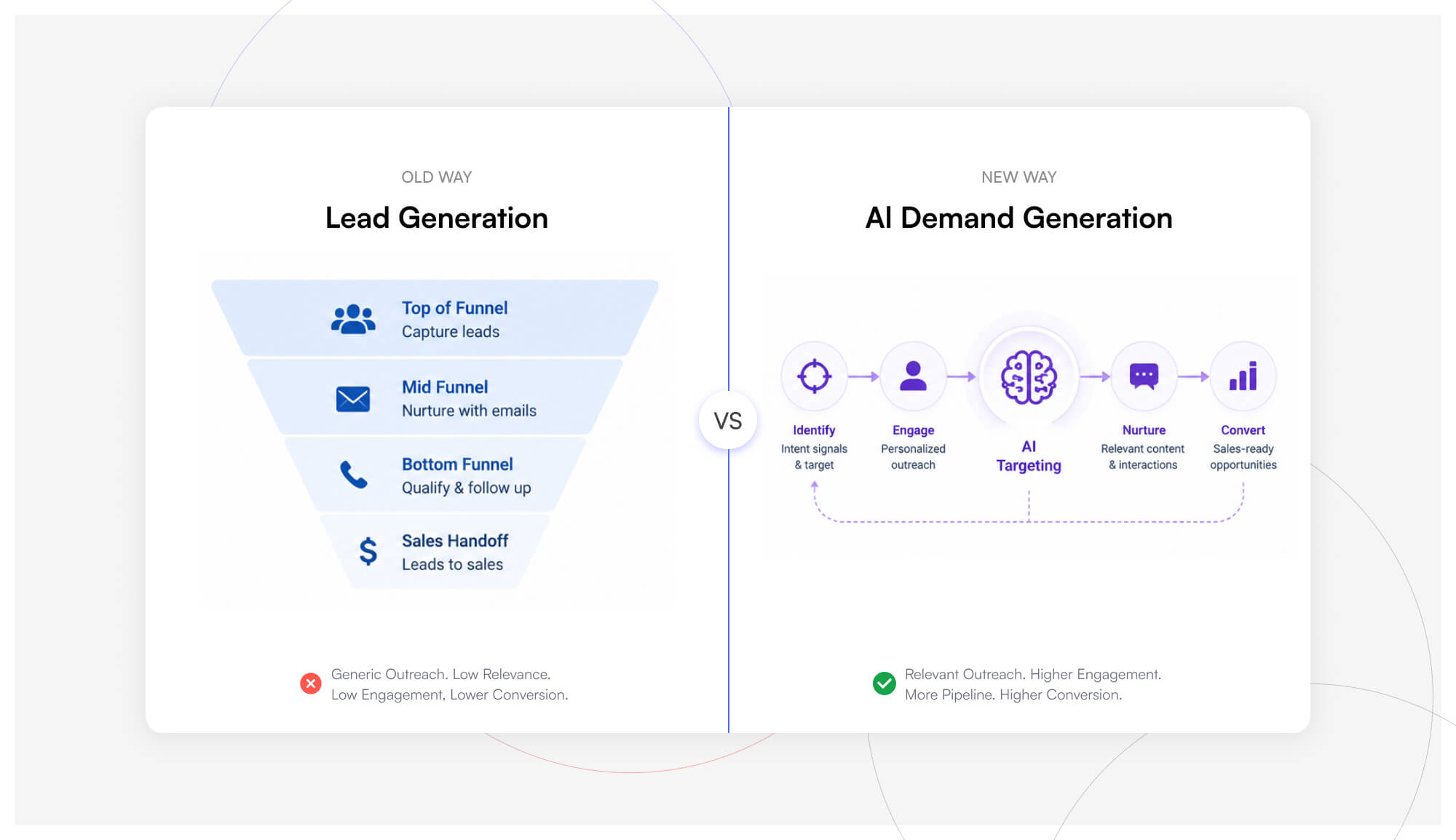
The confusion often comes from how closely it gets tied to lead generation strategies. Lead generation focuses on people who already know what they want. Demand generation works earlier in the process by helping buyers understand their problem, explore possible solutions, and build confidence before they ever raise their hand. This difference is more important now because modern buyers spend a significant amount of time researching independently, often completing most of their evaluation before speaking to sales.
The Full-Funnel Approach and the Role of Intent Data
That behavior has made a full-funnel approach essential. Content, positioning, and timing all play a role in moving prospects toward sales-qualified leads. Intent data and behavioral insights add another layer by showing which accounts are actively exploring a solution. Teams that rely on data driven B2B demand generation can spot real interest sooner and engage more effectively, while others are left reacting too late.
The Rise of AI in B2B Marketing and Demand Generation
From Automation to Intelligence-Driven Execution
Automation has been part of B2B marketing for years, helping teams scale repetitive tasks like email sequencing and campaign scheduling. What it lacked was context. AI changes that by adding decision-making into the mix. Instead of applying fixed rules, AI-driven systems analyze behavior, timing, and engagement signals to decide who to target, when to reach out, and how to do it effectively. This shift defines modern AI-Powered B2B Marketing Services.
Smarter Targeting and Performance Marketing
One of the biggest advantages of AI is how it improves performance marketing. Campaigns are no longer based only on static audience definitions. AI continuously refines targeting by identifying which accounts are actually engaging and converting. This allows teams to spend on high-intent prospects, reducing wasted budget and lowering customer acquisition costs. AI demand generation services also make it easier to react quickly, using real-time insights to adjust campaigns as they run.
Personalization, Prediction, and Better Alignment
AI also improves how businesses personalize content and nurture leads. Messaging can adapt based on industry, role, and behavior, making each interaction more relevant. Predictive signals help prioritize sales-qualified leads, giving both marketing and sales a clearer view of buyer readiness. As a result, teams stay aligned, decisions happen faster, and demand generation becomes more consistent and scalable.
Core Components of an AI-Powered B2B Demand Generation Framework
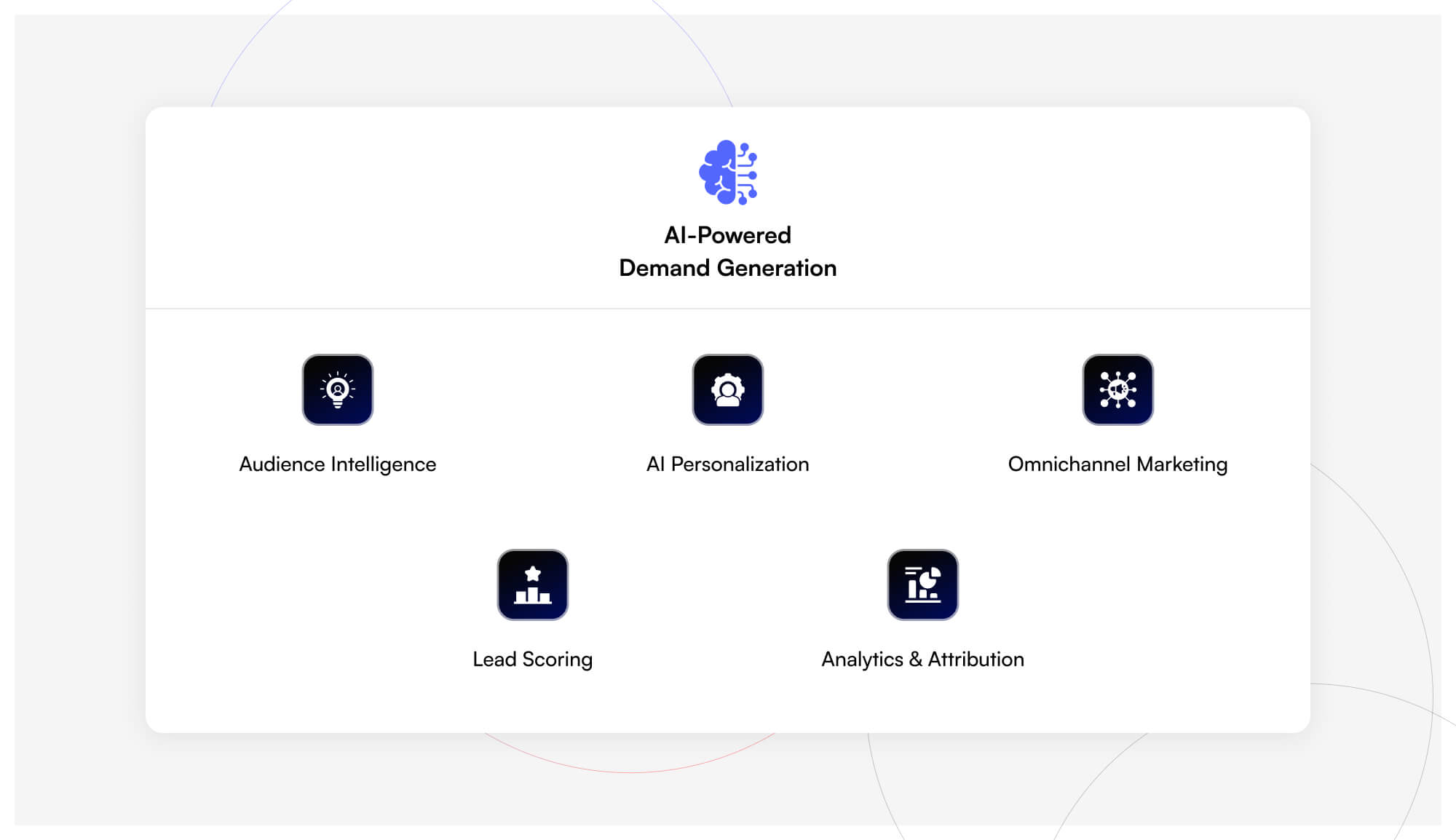
Audience Intelligence and Data Collection
Strong demand generation services start with a clear and evolving understanding of the target audience. Instead of relying on a static ICP, AI continuously refines the Ideal Customer Profile based on real conversion data and behavior patterns. First-party data from CRM systems, website activity, and product usage combines with third-party data such as firmographics, technographics, and intent signals to create a more accurate view of potential buyers. This approach enables effective buyer intent tracking, helping teams prioritize accounts that are actively researching solutions rather than relying on outdated lists.
AI-Driven Content Personalization
Relevance plays a major role in engagement. AI-driven personalization helps content adapt to each account’s context. Personalized landing pages adjust messaging based on industry or role, while dynamic email campaigns evolve based on user behavior. Industry-specific messaging helps build trust early in the journey. Conversational AI and chatbots extend this by engaging visitors in real time, surfacing relevant information and guiding high-intent users toward the next step without friction.
Omnichannel Performance Marketing
B2B buyers interact with brands across multiple touchpoints, which makes omnichannel performance marketing essential. A coordinated approach across LinkedIn Ads, and Google Search campaigns helps maintain consistent visibility. Account-based marketing campaigns target key stakeholders within the same account, while retargeting strategies re-engage users who showed interest but did not convert. Multi-touch attribution helps identify which channels and combinations are actually contributing to pipeline growth.
Lead Scoring and Sales Qualification
Not all leads carry the same value, which makes accurate qualification critical. Predictive lead scoring models use behavioral and firmographic data to identify high-potential accounts. This helps teams focus on true sales qualified leads instead of chasing low-intent contacts. AI-based CRM workflows automate follow-ups, ensuring timely engagement and better alignment between marketing and sales teams.
Analytics, Attribution, and Optimization
Measuring outcomes is essential for long-term success in demand generation services. AI-powered reporting dashboards connect campaign activity to revenue, offering a clear view of ROI. Revenue attribution models track the full buyer journey, while continuous optimization helps performance marketing efforts improve over time based on what is actually driving conversions.
How AI Improves B2B Sales Funnel Efficiency
AI demand generation services help build a faster and more efficient sales funnel by improving lead quality, timing, and engagement. Instead of relying only on traditional lead generation strategies, AI focuses on real buying signals and actionable insights.
Here’s what changes in practice:
Fewer low-quality leads
AI filters weak prospects early by identifying buying intent signals, so sales teams focus only on high-potential accounts.Higher conversion rates
Sales teams engage prospects with better context, making conversations more relevant and effective.Shorter sales cycles
Automated segmentation and personalization help prospects receive the right content at the right time, supporting consistent nurturing workflows without manual effort.Smarter prioritization
AI predicts deal closure probability, helping teams focus on accounts that are closer to making a purchase decision.Better performance marketing outcomes
Budget is continuously optimized toward high-value, in-market accounts, which improves performance marketing results and reduces wasted spend.
Building Scalable Sales Growth with AI-Powered Demand Generation
Scaling B2B demand generation becomes difficult when teams try to expand campaigns across multiple markets, products, and personas without the right systems in place. AI-Powered B2B Marketing Services help manage this complexity more effectively. Instead of relying on manual execution, they bring together data infrastructure and automation to manage audience targeting, campaign optimization, and performance tracking in a more structured way. This allows B2B services companies to scale without constantly increasing headcounts.
As a result, businesses can build more predictable revenue pipelines by consistently engaging the right accounts at the right stage of the buying journey. This alignment also improves coordination between sales and marketing, so both teams work toward shared goals. Over time, better targeting leads to higher-quality acquisition, which directly impacts customer lifetime value. For growing B2B services organizations, this approach supports long-term growth by making demand generation more consistent, measurable, and easier to scale.
Common Challenges in AI-Driven Demand Generation
AI-driven demand generation can improve results, but it also comes with a few common challenges that can limit its impact if not handled carefully.
Poor data quality
Incomplete or outdated data affects how accurately AI systems identify and prioritize accounts. Clean, well-structured data is the foundation of effective demand generation services.Lack of integration between tools
When CRM, intent data, and campaign platforms do not connect properly, teams lose a unified view of accounts. This directly affects performance marketing B2B services, as campaigns rely on connected data to target and engage the right accounts.Over-automation risks
Running campaigns without human review can lead to irrelevant messaging or poor targeting. Human oversight helps validate outputs and keep campaigns aligned with real buyer behaviorMisalignment between sales and marketing
If both teams are not using the same signals and definitions, it creates gaps in follow-up and qualificationAttribution challenges
Long sales cycles make it difficult to track what influenced a deal. Focusing on directionally accurate insights helps improve decision-making over time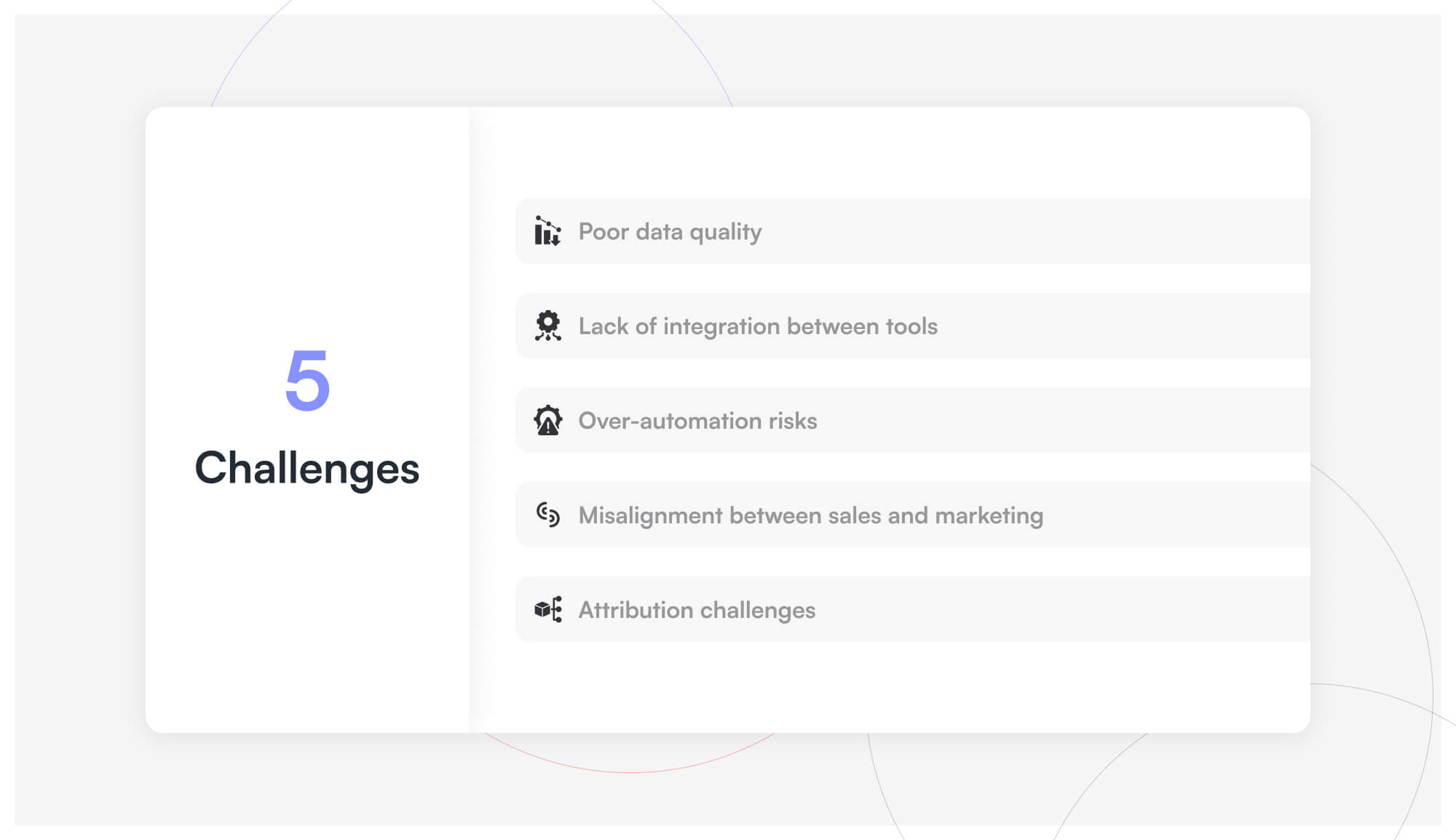
Choosing the Right AI Demand Generation Partner
Choosing the right partner for AI demand generation services can directly impact pipeline quality and growth. Businesses should look for agencies with proven experience in B2B performance marketing, since B2B services involve longer sales cycles, multiple stakeholders, and more complex decision-making. Strong industry expertise and strategic consulting capabilities also matter, as they help align campaigns with actual business goals rather than just surface-level metrics.
Technology and results are equally important when evaluating AI-Powered B2B Marketing Services. An integrated technology stack makes it easier to manage data, targeting, personalization, and analytics in one place. At the same time, the focus should stay on measurable outcomes such as qualified leads, pipeline growth, and revenue impact.
MassMetric follows this approach by combining data-driven strategy with AI-enabled execution, helping B2B services companies connect demand generation efforts directly to business results.
Future Trends in AI-Powered B2B Demand Generation
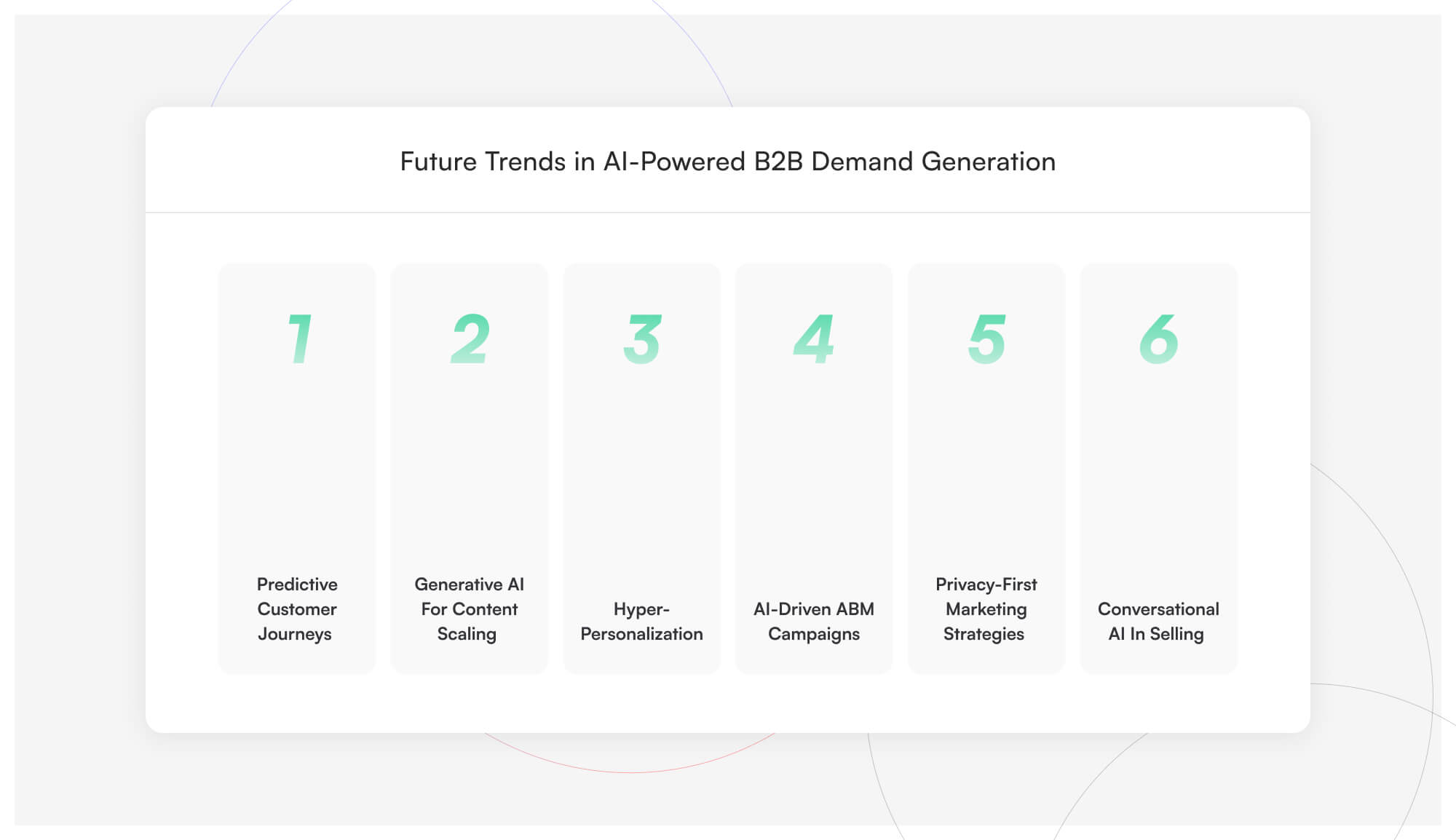
B2B demand generation is evolving as AI becomes more integrated into how companies engage and convert buyers. A few key trends are shaping how AI demand generation services and performance marketing will develop in the coming years.
Predictive customer journeys
AI tracks how each account interacts with content and campaigns, giving teams a clearer view of where they are in the buying process and what to do next.Generative AI for content scaling
Teams can create personalized content faster, making it easier to support multiple industries, roles, and use cases.Hyper-personalization
Messaging and engagement adapt based on real-time behavior, improving relevance across the buyer journey.AI-driven ABM campaigns
Targeting becomes more precise by identifying both accounts and key decision-makers within them.Privacy-first marketing strategies
Greater reliance on first-party data and consent-based engagement is reshaping B2B demand generation.Conversational AI in selling
AI tools are handling early interactions, supporting AI demand generation services by speeding up response times.
Conclusion
B2B demand generation has moved far beyond manual campaigns and disconnected efforts. To build consistent, scalable sales growth, businesses need systems that combine data, strategy, and execution. AI-Powered B2B Marketing Services make this possible by turning demand generation services into a more structured and reliable engine.
Over time, this approach improves pipeline quality, increases the number of Sales Qualified Leads, and creates steady revenue momentum. For companies looking ahead, adopting AI-driven B2B demand generation is not just an upgrade. It is a necessary step toward sustainable growth and long-term competitiveness.
Ready to improve pipeline quality and generate more Sales Qualified Leads? See how AI-Powered B2B Marketing Services can strengthen your B2B demand generation efforts and turn them into a scalable, revenue-focused system. Connect with the MassMetric team to get started.
FAQ
|