Why B2B Companies Need a Digital Experience Platform in 2026
Published:
|
By
MassMetric
Introduction
B2B buyers in 2026 expect more than product information. They want personalized experiences, relevant content, and consistent interactions across every digital channel they use. Before engaging with a sales representative, buyers often research solutions independently, compare vendors across multiple platforms, and evaluate available resources on their own. However, many organizations still rely on disconnected systems that make it difficult to deliver a consistent digital customer journey.
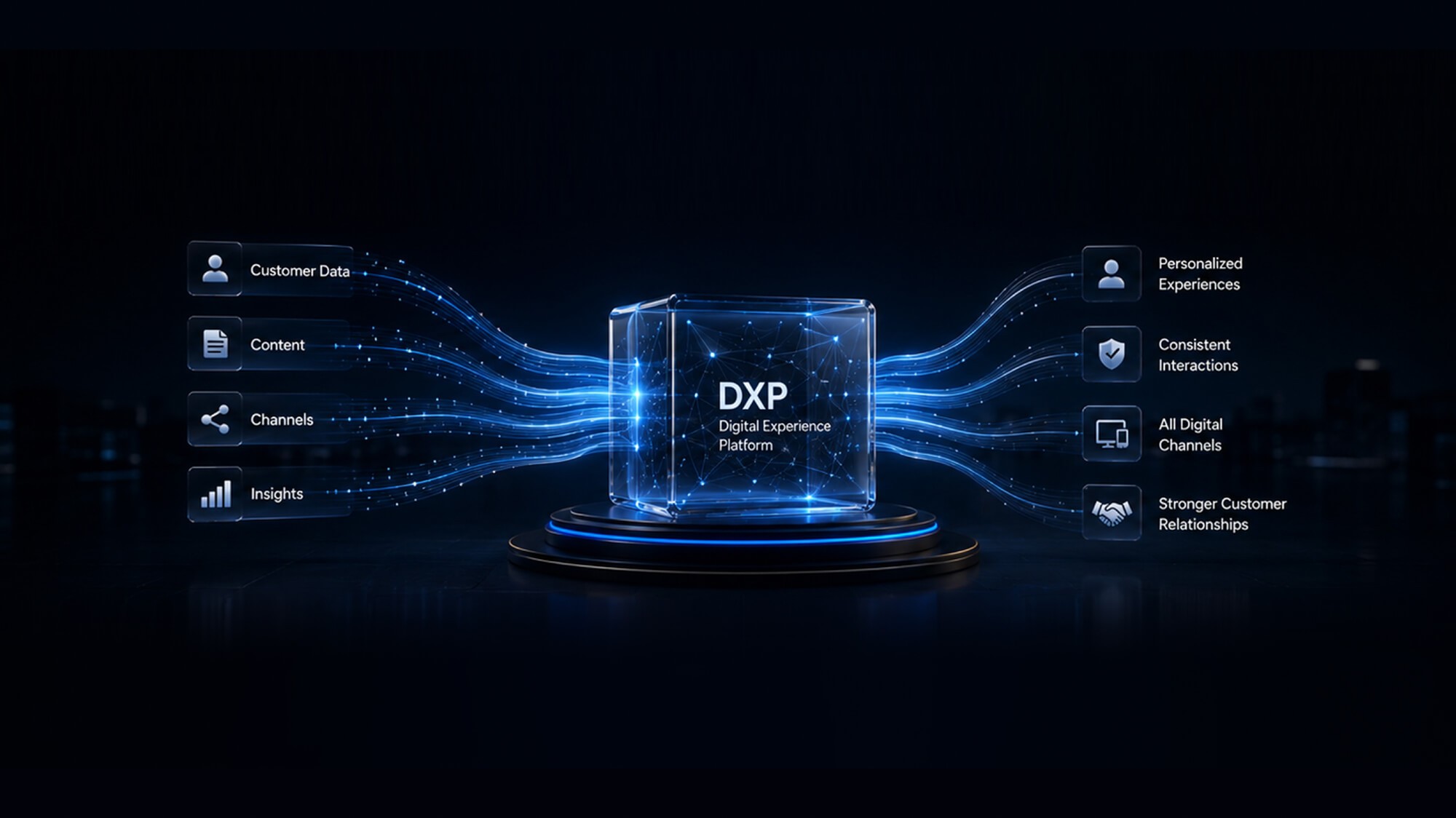
As businesses focus on improving customer engagement and supporting digital transformation, a B2B digital experience platform (DXP) has become increasingly important. Unlike standalone tools that manage content, data, or marketing activities separately, a DXP brings these capabilities together within a single platform.
This enables organizations to deliver personalized experiences, maintain consistency across digital channels, and build stronger customer relationships. For many B2B companies, a DXP is now a key part of long-term growth and enterprise digital strategy.
What Is a Digital Experience Platform (DXP)?
Understanding the Basics
A digital experience platform is a technology solution designed to create, manage, and deliver digital experiences across multiple channels from a centralized environment.
Unlike a traditional CMS, which primarily focuses on publishing website content, a DXP platform combines content management, customer data, personalization capabilities, analytics, and workflow management. The goal is to create more relevant and consistent experiences across websites, customer portals, mobile apps, email campaigns, and other digital channels.
For B2B organizations, this distinction is important. Modern buying processes involve multiple stakeholders, longer sales cycles, and interactions across various channels. An enterprise DXP helps manage this complexity while supporting broader digital experience management initiatives.
Key Components of an Enterprise DXP
A modern enterprise DXP typically includes:
Content management for creating and managing reusable content assets.
Personalization engines that tailor experiences based on user behavior, industry, account, or role.
Customer data integration that connects information from CRM, marketing automation, and business systems.
Analytics and reporting capabilities that measure engagement and performance.
Workflow automation that simplifies collaboration between teams.
Omnichannel content delivery that publishes content across websites, apps, portals, and other platforms from a single source.
Why B2B Customer Expectations have changed

The Rise of Self-Service Buying Journeys
The modern B2B buyer journey is driven by research. Buyers expect immediate access to product information, industry insights, case studies, pricing details, and customer success stories.
Today's self-service buying environment allows decision-makers to gather information independently. As a result, companies must provide relevant content at every stage of the digital customer journey, from initial awareness to final purchase decisions. Organizations that fail to support self-service buying often risk losing prospects before a sales conversation even begins.
Personalization Is No Longer Optional
Consumer technology has influenced B2B expectations. Buyers have become accustomed to personalized recommendations, customized content, and relevant interactions. As a result, B2B personalization has become an important part of customer-centric marketing.
Procurement teams, technical evaluators, executives, and business leaders all require different information during the purchasing process. Delivering personalized customer experiences helps organizations improve engagement, build trust, and provide content that directly addresses buyer needs.
The Need for Consistent Omnichannel Experiences
Customers interact with brands through websites, customer portals, emails, mobile applications, and partner channels. Maintaining consistency across these digital touchpoints is critical. A fragmented experience can create confusion and reduce confidence in a brand.
Organizations increasingly recognize the value of an omnichannel customer experience supported by centralized content and customer data. A unified customer experience helps maintain consistent messaging and brand credibility across every interaction.
Top Reasons B2B Companies Need a Digital Experience Platform in 2026
1. Deliver Personalized Customer Experiences at Scale
One of the biggest advantages of a B2B digital experience platform is the ability to create personalized customer experiences for different audiences.
Organizations can build customer segments based on:
Industry
Business size
Geographic location
User role
Account information
Previous interactions
This enables account-based experiences and role-specific content delivery. Instead of presenting the same information to every visitor, companies can provide content that is more relevant to individual needs. Better personalization often leads to stronger customer engagement and higher conversion rates.
2. Unify Content Across Multiple Digital Channels
Managing separate versions of content for websites, portals, and mobile applications can be time-consuming. A DXP supports centralized content management, allowing organizations to create content once and distribute it across multiple channels.
Many modern platforms support headless CMS and hybrid architectures, enabling greater flexibility in content distribution. Marketing teams can update information quickly while maintaining consistency across all digital properties. This approach supports a stronger digital content strategy while reducing duplicate work.
3. Support Complex B2B Buyer Journeys
The B2B purchasing process often involves multiple decision-makers and extended evaluation periods.
A buying committee may include:
Technical stakeholders
Procurement teams
Department managers
Executive sponsors
Each stakeholder requires different information during the decision-making process. A DXP helps organizations align content with various stages of customer journey mapping, including awareness, consideration, evaluation, and purchase.
This creates a better customer experience and supports more effective lead nurturing efforts throughout the customer lifecycle.
4. Improve Marketing and Sales Alignment
Sales and marketing teams perform better when they have access to shared customer insights. A connected customer experience platform enables both teams to view customer interactions, content engagement, and behavioral data from a single location.
This improves:
Lead management
Account-based marketing initiatives
Sales and marketing alignment
Customer communication
With better visibility into customer activity, sales teams can have more informed conversations, and marketing teams can create more relevant campaigns.
5. Strengthen Data-Driven Decision Making
Successful digital strategies rely on accurate data. A DXP provides access to customer analytics, content performance metrics, and customer behavior analytics that help organizations understand what works and what does not.
Instead of making assumptions, marketing teams can rely on real-time insights to:
Measure engagement
Monitor performance tracking
Improve content effectiveness
Support business intelligence efforts
This data-driven marketing approach leads to more informed business decisions and better marketing results.
6. Accelerate Digital Transformation Initiatives
Many organizations continue to manage multiple disconnected systems that create operational challenges. An enterprise DXP brings content, data, and digital experiences together within a single framework. This reduces technology complexity and supports broader digital transformation initiatives.
By simplifying processes and improving collaboration, companies can respond more quickly to market changes and new opportunities. The result is greater business agility, stronger digital innovation efforts, and a more scalable digital infrastructure.
The Role of DXP in Modern B2B Marketing Technology
Integrating with Existing Martech Ecosystems
A DXP complements existing B2B marketing technology investments rather than replacing them.
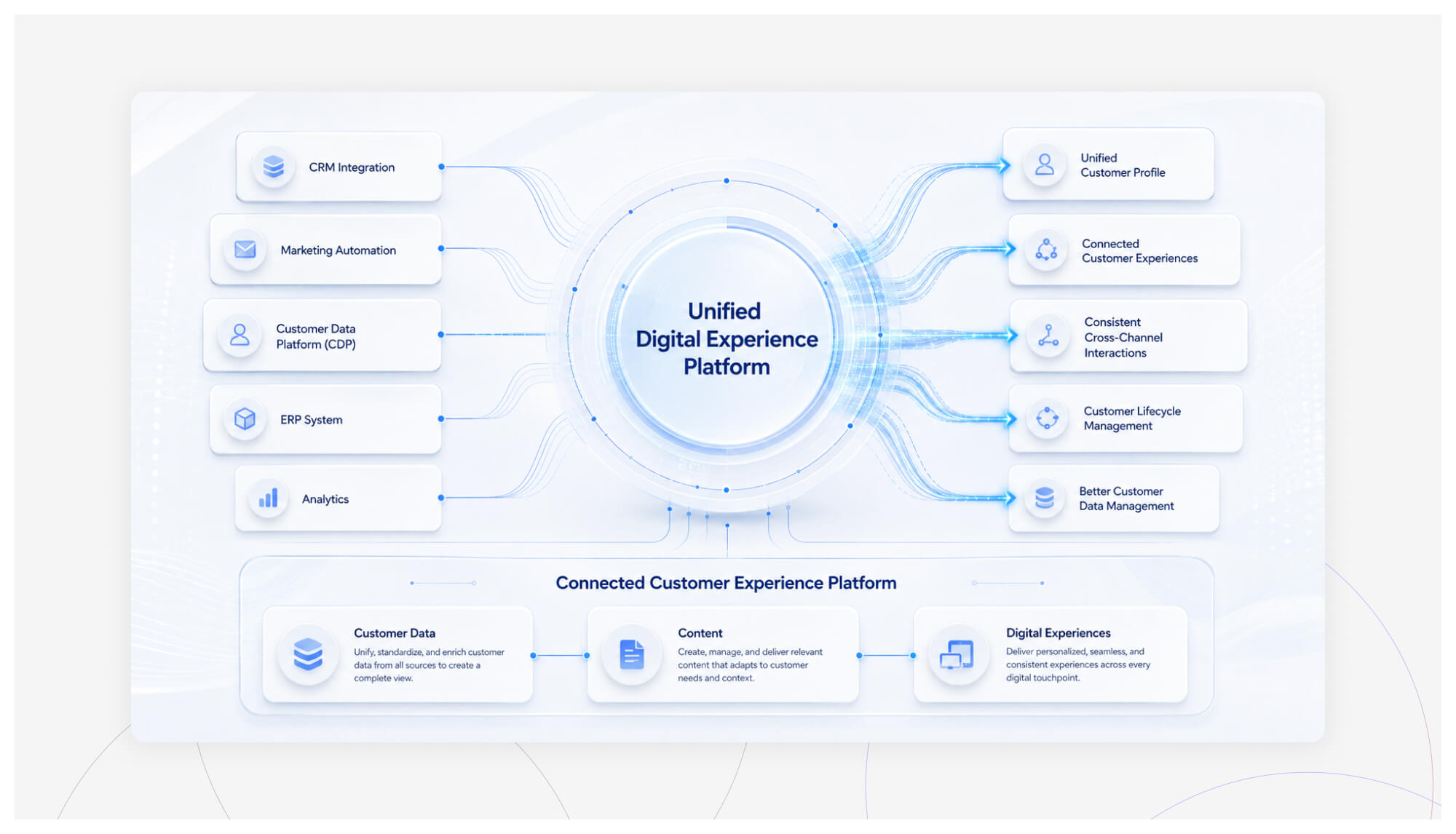
Most enterprise platforms provide integration capabilities for:
CRM integration
Marketing automation platforms
Customer data platforms (CDPs)
ERP systems
Analytics solutions
These integrations create a connected martech stack where customer information flows between systems instead of remaining isolated in separate databases.
Creating a Connected Customer Experience Platform
When data from various systems is connected, organizations can build a unified customer profile that reflects a customer's complete history with the business.
This enables:
Connected customer experiences
Better customer data management
Consistent cross-channel interactions
Improved customer lifecycle management
With a more complete understanding of customer needs, businesses can deliver more relevant and timely interactions.
Key Benefits of an Enterprise DXP for B2B Organizations
1.Enhanced Customer Engagement
Relevant content leads to more meaningful interactions. By delivering personalized experiences and useful information, companies can improve customer satisfaction, increase customer retention, and encourage deeper engagement across digital channels.
2.Greater Operational Efficiency
Centralized content management and workflow automation reduce repetitive tasks and simplify content operations. Teams spend less time managing manual processes and more time focusing on strategy, content creation, and campaign execution.
3.Faster Time-to-Market
An enterprise DXP supports agile marketing by making content creation, approval, and deployment more efficient. Organizations can launch campaigns, update websites, and publish content faster while maintaining consistency across channels.
4.Better Scalability for Growth
As organizations expand into new regions, launch products, or manage multiple brands, digital operations become more complex.
A scalable DXP supports enterprise scalability through centralized governance and global content management capabilities. This helps organizations maintain control while supporting long-term digital growth strategies.
How to Choose the Right B2B Digital Experience Platform
Essential Features to Look For
When evaluating an enterprise DXP, organizations should focus on capabilities that directly support business goals.
Important features include:
AI-powered personalization
Headless architecture
Advanced analytics
Customer data integration
Workflow automation
Omnichannel content delivery
Security and compliance controls
Composable architecture support
These capabilities create a flexible foundation for long-term digital experience management.
Questions Decision-Makers Should Ask
Before selecting a platform, decision-makers should evaluate several key factors:
Can the platform support future business growth?
How easily does it integrate with existing technology investments?
What level of customization is available?
What resources are required for DXP implementation?
How scalable is the solution across regions and product lines?
What ongoing maintenance requirements should be expected?
These questions help organizations make informed technology investment decisions and conduct a more effective DXP vendor evaluation process.
The Future of DXPs in B2B: What to Expect Beyond 2026

The future of digital experience platforms will be shaped by advances in artificial intelligence, customer data management, and composable technologies.
Organizations can expect continued growth in:
AI-powered DXP capabilities
Predictive personalization
Automated customer engagement
Composable DXP architectures
Real-time customer insights
First-party data strategies
As privacy regulations and customer expectations continue to evolve, first-party data will become even more valuable. Businesses that build strong customer data foundations will be better positioned to deliver relevant experiences without relying heavily on third-party information.
These developments point toward a future where digital experiences become more responsive, personalized, and connected throughout the customer journey.
Conclusion
A B2B digital experience platform has become an essential part of business growth in 2026. As buyer expectations continue to evolve, organizations need connected systems that support personalized experiences, consistent content delivery, and data-driven decision-making.
An enterprise DXP brings content, customer data, and digital interactions together, helping organizations create better customer experiences across channels. For companies looking to strengthen customer engagement, support digital transformation, and remain competitive, investing in the right customer experience platform can provide a strong foundation for long-term business growth.
As B2B organizations focus on delivering personalized customer experiences and connected digital journeys, MassMetric helps businesses maximize their digital engagement through services such as AI Optimized OTT Ads, Content Syndication, Demand Generation, AI-Powered Campaigns, and B2C Performance Marketing. These solutions help organizations reach the right audiences and create stronger customer engagement across digital channels. They also support data-driven marketing efforts, helping businesses achieve sustainable growth and long-term success.
Frequently Asked Questions
|