B2B Demand Generation Services: 8 Proven Tactics for High-Quality Leads
Published:
|
By
MassMetric

Most B2B demand generation services promise more leads, yet sales teams often spend their time chasing contacts that never progress beyond an initial interaction. The issue is not visibility or reach. It is the absence of clear buying intent and poor alignment with the ideal customer profile, which results in a pipeline that looks full but delivers very little revenue impact.
High-performing B2B demand generation services focus on precision instead of scale. They identify in-market buyers, apply sharp targeting, and use personalized messaging to engage decision-makers. This approach improves pipeline quality, shortens sales cycles, and drives more reliable conversions from leads that are actually worth pursuing.
Why Lead Quality Matters More Than Lead Volume
Chasing volume might look good on reports, but low-quality leads quietly drain resources. Poor targeting brings in companies that do not fit the offering or are not ready to buy. Sales teams end up spending time on conversations that do not convert, while marketing budgets are spent without delivering real pipeline value. This is where many B2B demand generation efforts lose effectiveness.
Lead quality matters more than volume because revenue comes from Sales Qualified Leads, not raw lead counts. Sales Qualified Leads meet clear criteria such as company fit, buying intent, and readiness to engage. A strong B2B demand generation strategy focuses on increasing SQLs and tracking pipeline metrics like conversion rates and customer acquisition cost, instead of relying on vanity metrics that do not reflect growth.
Proven B2B Demand Generation Tactics for High-Quality Leads
Define and Target the Right Ideal Customer Profile (ICP)
Strong Demand Generation Services start with clarity on who you are trying to reach. An Ideal Customer Profile built on firmographic data such as industry, company size, revenue, and tech stack helps narrow the focus. Adding behavioral signals like content engagement and buying intent makes it more accurate.
Identifying high-converting industries and buyer roles helps campaigns reach decision-makers who influence purchases. This improves lead relevance, reduces wasted acquisition spend, and increases conversion rates because you are targeting accounts that are more likely to move forward.
Use Intent Data to Capture Buyers at the Right Time
Timing plays a major role in B2B Demand Generation. Tracking search behavior, website visits, and engagement signals helps identify prospects who are actively researching solutions. Intent-based targeting tools bring together first-party and third-party data to surface these high-interest accounts.
This approach allows Demand Generation Services to focus on buyers who are already in the market. It improves Sales Qualified Leads quality and shortens sales cycles because outreach is based on real interest, not assumptions.
Create Educational Content That Solves Buyer Problems
Effective Lead Generation Strategies rely on content that answers real questions. SEO-driven blogs targeting specific pain points bring in consistent organic traffic. Case studies highlight measurable outcomes and help build confidence among decision-makers.
Whitepapers, webinars, and industry reports position your brand as a credible voice. Educational content builds trust over time, which is critical in B2B buying cycles. When buyers see consistent value, they are more likely to engage, making inbound demand stronger and more qualified.
Leverage AI-Powered Demand Generation
AI Demand Generation Services improve how campaigns are executed and optimized. AI-driven lead scoring helps rank leads based on their likelihood to convert, allowing sales teams to focus on the most promising opportunities. Predictive analytics identifies accounts that are likely to enter a buying cycle.
AI-Powered B2B Marketing Services also enable automated personalization. Messaging, ads, and landing pages can be tailored dynamically based on audience segments. This increases targeting accuracy, improves engagement, and helps prioritize sales-ready leads more effectively.
Run Multi-Channel Performance Marketing Campaigns
Performance Marketing works best when it reaches buyers across multiple channels. LinkedIn Ads are effective for targeting by role, company size, and industry. Google Search campaigns capture users actively looking for solutions. Retargeting keeps your brand visible after initial engagement.
Performance Marketing B2B Services often combine these with account-based advertising to focus on high-value accounts. B2B buyers typically interact with multiple touchpoints before making a decision, so consistent visibility across channels increases trust and engagement.
Optimize Landing Pages for Lead Conversion
Even strong campaigns can fail if landing pages do not convert. Clear value propositions help visitors understand what they gain. Conversion-focused copy should address the problem before presenting the solution.
Strong calls to action, trust indicators like client logos and testimonials, and short forms reduce friction. These elements improve lead quality, reduce drop-offs, and increase conversion rates by making it easier for prospects to take the next step.
Implement Lead Nurturing Workflows
Most leads are not ready to convert right away. Email automation, personalized follow-ups, and behavior-triggered campaigns help maintain engagement over time. Retargeting sequences keep your brand visible throughout the decision process.
Well-structured nurturing improves Sales Qualified Leads by guiding prospects through the funnel. Instead of losing interest, leads receive relevant information that moves them closer to a sales conversation.
Align Marketing and Sales Teams
Alignment between marketing and sales is critical for consistent results. Shared lead qualification criteria help both teams agree on what defines a Sales Qualified Lead. Faster response times improve the chances of conversion.
CRM integration and reporting provide visibility to lead progress. Feedback loops help marketing refine campaigns based on real sales insights. This alignment improves SQL conversion rates and creates a more predictable pipeline that supports long-term growth.
Metrics That Measure Demand Generation Success
Metrics that measure demand generation success go beyond lead volume and focus on revenue impact. Sales Qualified Leads help track how many leads are actually ready for sales, while conversion rates reveal how efficient leads move through the funnel. Cost Per Lead and Customer Acquisition Cost indicate how efficiently budget is being used.
CRM systems help measure pipeline contribution and overall lead progression, while Return on Ad Spend shows the revenue generated from campaigns. These metrics matter more than traffic or impression data because they directly reflect business growth. When teams track and optimize these numbers, demand generation becomes more predictable and results-driven.
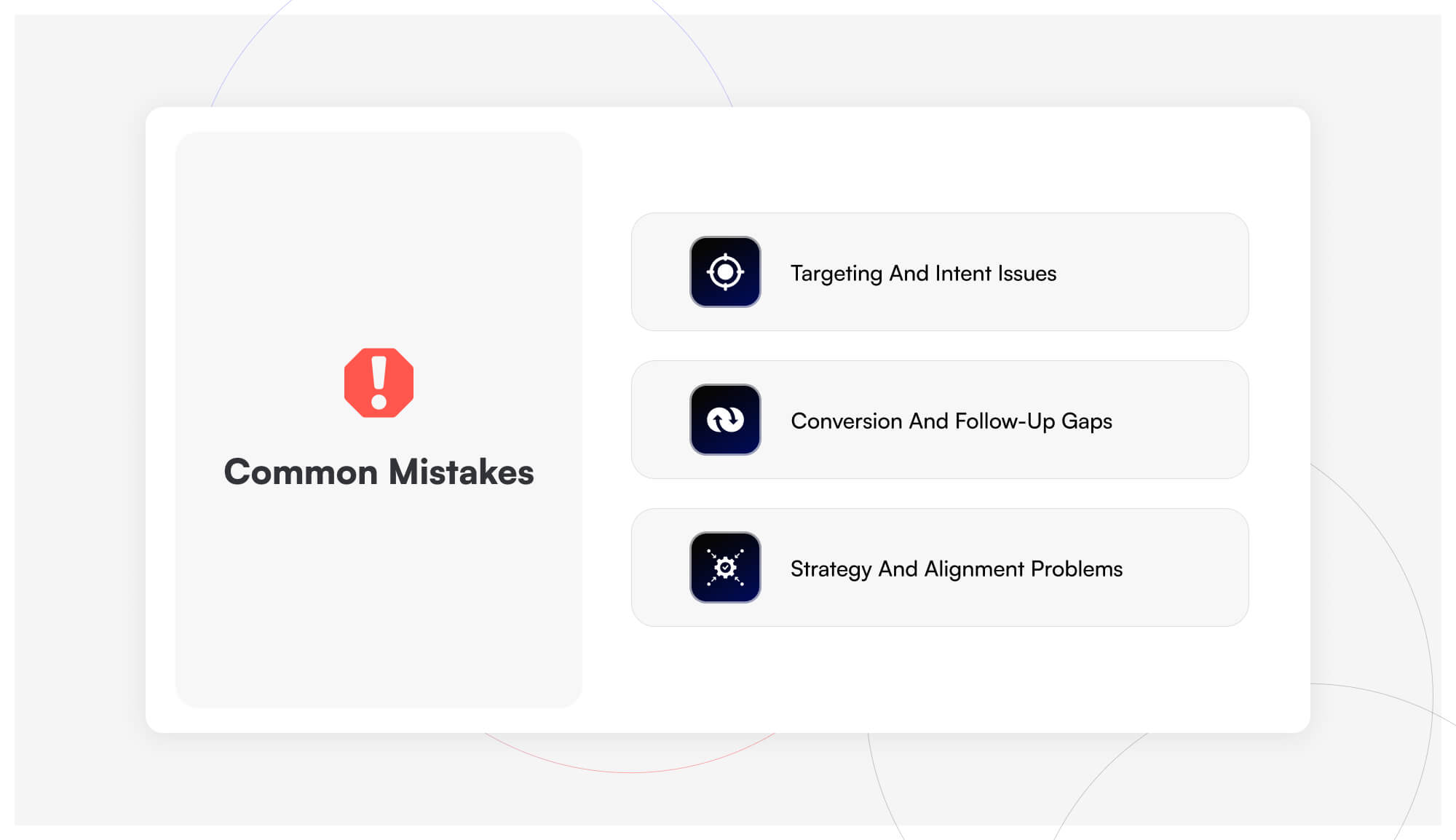
Common Mistakes That Hurt Lead Quality
Many B2B demand generation efforts struggle because of a few repeated mistakes that quietly damage lead quality and pipeline performance.
Targeting and intent issues
Targeting overly broad audiences without a clear ICP
Ignoring intent data and treating all leads the same
Failing to prioritize buyers actively researching solutions
Conversion and follow-up gaps
Weak follow-up systems that allow high-intent leads to go cold
Delayed response times that reduce conversion chances
Poor landing page optimization with unclear messaging or too much friction
Strategy and alignment problems
Focusing on lead quantity instead of Sales Qualified Leads
Measuring success by volume instead of conversion outcomes
Lack of alignment between sales and marketing on lead quality
These issues often compound with each other. Broad targeting brings in low-fit leads, weak follow-up loses the good ones, and misalignment makes it harder to fix the problem. Improving lead quality requires tightening each of these areas, so B2B demand generation efforts produce leads that actually convert.
How MassMetric Helps Businesses Generate High-Quality Leads
MassMetric helps businesses improve B2B Demand Generation by combining AI Demand Generation Services with performance-driven execution. We focus on identifying the right audience using data-driven lead qualification and intent signals, so campaigns reach accounts that are more likely to convert. By aligning targeting with real buying behavior, it helps increase Sales Qualified Leads and overall pipeline quality.
Our approach brings together SEO, paid media, and multi-channel B2B marketing into a connected system. AI-Powered B2B Marketing Services enable personalization at scale, while continuous optimization keeps campaigns focused on outcomes. The result is a more predictable pipeline and a better return on marketing spend. You can book a demand generation consultation or request a growth strategy session to get started.
Conclusion
High-quality B2B leads are the result of a focused B2B Demand Generation strategy, not mass lead collection. Companies that focus on buyer intent, relevant messaging, and timely engagement are more likely to attract prospects who are genuinely interested in a solution.
Combining performance marketing with strong sales and marketing alignment further improves lead quality and pipeline efficiency. Instead of chasing volume, successful teams focus on generating Sales Qualified Leads that contribute to revenue. When B2B demand generation efforts are built around quality, the result is a stronger pipeline and more predictable business growth.
Frequently Asked Questions | ||||||
|