GEO to GEM: Optimize for Generative Engine Marketing
Published:
|
By
MassMetric

Search behavior has moved through several distinct phases in a short period of time. Traditional SEO focused on ranking in search engine results pages and driving organic traffic to websites. As AI answer engines began summarizing information directly, Generative Engine Optimization (GEO) emerged to help brands appear in AI-generated responses. Today, the growing use of AI assistants, conversational AI search, and answer engines is creating another evolution in digital marketing which is Generative Engine Marketing (GEM).
GEM is not a replacement for GEO. It represents the next stage after a brand achieves visibility in AI-generated answers. Once an AI system can find and cite a brand, the next challenge is whether it recommends the brand, trusts its information, and includes it in a buyer's decision-making process. As AI plays a larger role in how people research products, compare solutions, and evaluate vendors, visibility alone is no longer enough. This article explores what GEM means, why it matters, and how businesses can build an effective strategy around it.
The Evolution from SEO to GEO to GEM
Search has evolved through three overlapping stages, with each phase reflecting changes in how people discover information and make decisions online.
SEO: Ranking in Search Engines
The first stage was traditional search engine optimization, built around keywords, backlinks, and page rankings on Google and other search engines. Success was measured by a page's position in search results and the volume of organic traffic it generated. The primary goal was to attract clicks and drive visitors to a website.
GEO: Visibility in AI Answer Engines
The second stage, Generative Engine Optimization (GEO), emerged alongside AI answer engines such as ChatGPT, Gemini, and Perplexity. These platforms do not simply display links. Instead, they generate direct responses by combining information from multiple sources. As a result, generative engine optimization became focused on helping content get discovered, understood, and cited accurately within AI-generated answers. This approach represents a growing area of AI search engine optimization.
GEM: Influence in AI-Driven Decisions
The third stage is Generative Engine Marketing (GEM). Ranking well or being cited is no longer the finish line. AI systems and conversational assistants increasingly support comparison shopping, vendor research, and purchasing decisions through conversational AI search experiences. A business that appears in an AI-generated response but is never recommended can still lose potential customers.
GEM focuses on how a brand is represented, discussed, and recommended across AI-driven conversations. The goal is not only to be visible, but also to build trust, strengthen brand perception, and increase the likelihood of being recommended when users ask AI systems for guidance.
What Is Generative Engine Marketing (GEM)?

Generative Engine Marketing (GEM) focuses on how AI systems understand, discuss, and recommend a brand throughout the customer journey. It builds on the foundation of generative engine optimization (GEO) and extends beyond visibility to influence how a brand is perceived in AI-driven conversations.
While GEO helps AI systems find and cite content, GEM focuses on whether a brand is recommended and presented in the right context when users seek information or compare options.
Visibility
Appearing in AI-generated answers and responses.Recommendation
Being suggested when users ask for product, service, or vendor recommendations.Brand Influence
Maintaining accurate and consistent brand information across the sources AI systems reference.AI-Driven Customer Journeys
Staying visible throughout the research, evaluation, and decision-making process, including conversational AI search experiences.
GEM marketing helps brands move beyond citations and become trusted options within AI-powered discovery and recommendation systems.
Why Businesses Must Move Beyond Traditional SEO
Changes in user behavior are making traditional SEO only one part of a broader visibility strategy.
AI-Generated Answers and Zero-Click Search
AI answer engines often provide complete responses without requiring users to visit a website. As a result, brands can gain impressions and citations while receiving fewer clicks.
Conversational Search Journeys
Users now rely on conversational AI search to ask detailed questions, request comparisons, and explore options through multiple interactions. Content must answer these evolving queries, not just target keywords.
Voice and AI-Assisted Discovery
Voice assistants and AI shopping tools are becoming important research channels. Product recommendations increasingly depend on how AI systems understand and evaluate brands.
Declining Reliance on SERPs
As AI-driven discovery grows, dependence on traditional search result pages continues to decline, making visibility and recommendations within AI systems more important.
Core Pillars of an Effective GEM Strategy
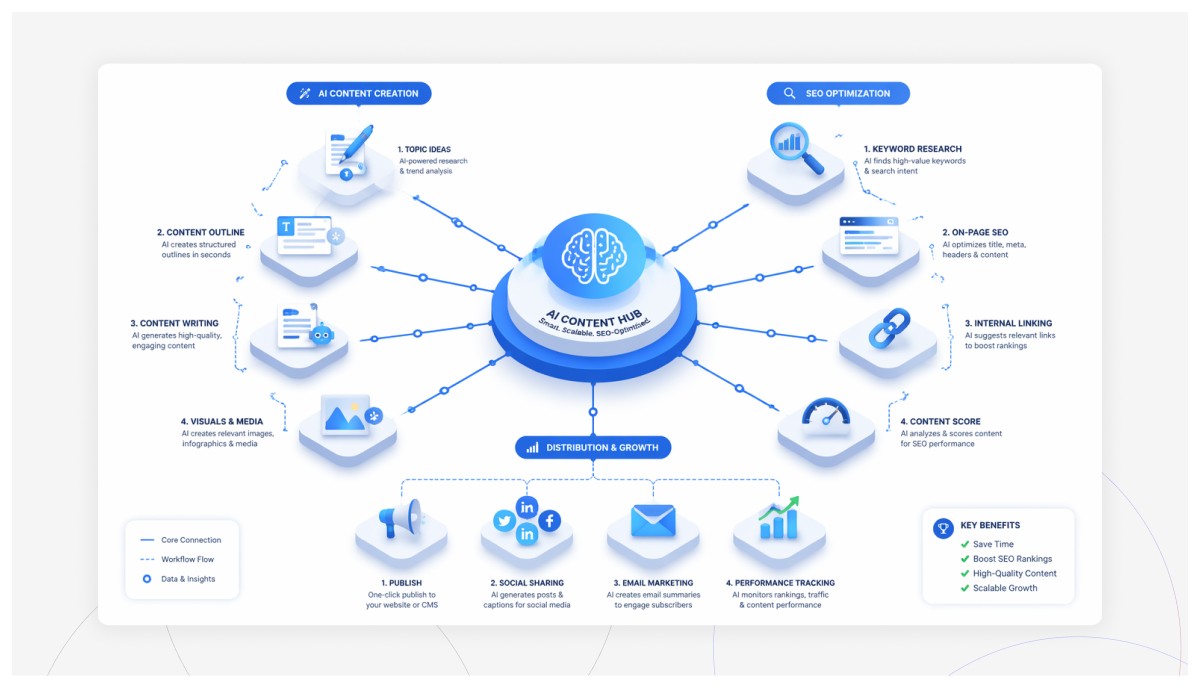
1. Create AI-Friendly Content
Content should be easy for AI systems to interpret and reference. Clear headings, direct answers, structured information, and topic-focused content help improve visibility through generative engine optimization and AI search engine optimization. Content that presents facts clearly often performs better than overly promotional messaging.
2. Strengthen AI Brand Semantics
AI systems build brand understanding from websites, reviews, directories, media mentions, and structured content. Consistent messaging, knowledge graph entries, and clear brand context help improve AI brand semantics and reduce inaccurate interpretations.
3. Optimize for Conversational Search
Content should reflect how people naturally interact with AI tools. Answering long-tail questions, creating FAQs, and developing prompt-style content can improve performance in conversational AI search. Responses should be clear, direct, and aligned with user intent.
4. Expand AI Tool Discovery
Brands should be discoverable across ChatGPT, Claude, Gemini, and Perplexity. Well-structured product documentation, trusted third-party citations, and relevant API integrations support AI tool discovery and help AI systems access accurate brand information.
GEM Best Practices for Modern Marketing Teams
Several practices can improve visibility and recommendations within AI-driven experiences.
Build topical authority by creating in-depth content around key subject areas rather than publishing large volumes of unrelated content.
Publish expert content supported by author credentials, reliable sources, and industry expertise.
Maintain structured data such as schema markup and organized product or service information to support AI search engine optimization.
Optimize multimedia with descriptive titles, alt text, captions, and metadata for images, videos, and audio content.
Monitor AI citations to understand how brands are referenced across AI-generated responses and identify inaccuracies.
Strengthen EEAT signals by demonstrating expertise, experience, authoritativeness, and trustworthiness.
Keep brand information consistent across websites, directories, review platforms, and other online sources to support strong AI brand semantics and accurate AI tool discovery.
Measuring Success in Generative Engine Marketing
Measuring GEM marketing performance requires metrics that go beyond traditional SEO reporting.
AI Mentions and Brand Citations:
Track how often a brand appears in AI-generated answers and the context in which it is referenced.AI Referral Traffic:
Measure visits originating from AI platforms rather than traditional organic search.Conversational Engagement:
Evaluate how a brand performs across conversational AI search interactions and multi-turn user queries.Voice Search Visibility:
Monitor how frequently a brand appears in voice assistant responses and voice search campaigns.Share of AI Recommendations:
Compare how often a brand is recommended against competing options within the same category.Conversion Quality:
Assess whether AI-driven visits lead to meaningful actions such as sign-ups, inquiries, or purchases.
Together, these metrics provide a clearer view of how visibility within AI systems contributes to business outcomes.
Future Trends in Generative Engine Marketing
Several developments are shaping the future of GEM marketing.

1. AI Agents
AI agents are becoming more capable of researching, comparing options, and making decisions on behalf of users. This increases the importance of accurate brand representation across AI-driven experiences.
2. Multimodal Search
Users are searching with images, video, voice, and text, making multimodal content an important part of AI tool discovery. Brands need to optimize content for multiple formats, not just text-based searches.
3. Voice-First Discovery
As voice assistants become more common, brands need to optimize for voice search campaigns and spoken queries. Voice-driven interactions are becoming a larger part of everyday research and product discovery.
4. Personalized AI Recommendations
AI systems are increasingly tailoring recommendations based on user preferences and behavior. This makes strong AI brand semantics and accurate brand information more important for visibility and relevance.
5. Autonomous Buying Assistants
Buying assistants that can evaluate options and complete purchases may increase the value of being recommended, not just cited, within conversational AI search experiences.
Conclusion
Search is no longer limited to traditional search engine results pages. As AI-generated answers, conversational AI search, and recommendation engines become part of the customer journey, brands need to rethink how they approach visibility and influence online.
Generative engine optimization (GEO) helped brands become discoverable within AI-generated responses. GEM marketing builds on that foundation by focusing on how brands are understood, trusted, and recommended by AI systems.
As AI-driven search and recommendations reshape buyer decision-making, brands need more than visibility to stand out. MassMetric helps businesses strengthen their digital presence through AI Optimized OTT Ads, Content Syndication, Demand Generation, AI-Powered Campaigns, and B2C Performance Marketing, enabling greater audience engagement, stronger brand influence, and measurable business growth.
FAQs | ||||||
|---|---|---|---|---|---|---|
|