Multi-Channel ABM: Why Email and LinkedIn Alone No Longer Work
Published:
|
By
MassMetric

Introduction:
Account-based marketing has become a core strategy in B2B because it helps teams focus on high-value accounts and build stronger pipeline opportunities. However, many companies still depend heavily on email and LinkedIn outreach alone. B2B buying journeys are now longer, buying committees are larger, and decision-makers are harder to engage through a single channel. Email inboxes are crowded, and LinkedIn has become increasingly saturated.
Multi-channel ABM helps solve this problem by combining channels like email, paid media, website personalization, LinkedIn, and intent data to create consistent engagement throughout the buyer journey. When multiple touchpoints work together, brands stay visible to key stakeholders and improve account engagement over time.
This article explores what multi-channel ABM is, why it matters, and how B2B teams can build an effective strategy.
What Is Multi-Channel ABM?
Multi-channel ABM is a strategy that coordinates personalized marketing and sales outreach across multiple platforms, all focused on a defined set of target accounts. Instead of running separate campaigns by channel, it connects email, LinkedIn, paid media, website experiences, and sales outreach into a single account-focused approach. Messaging stays consistent, timing is aligned, and each interaction builds on previous engagement to move accounts forward.
How It Differs from Traditional Outbound Campaigns
Traditional outbound campaigns are often channel-specific. Sales teams may run email cadences while marketing teams manage LinkedIn ads or paid campaigns. Even when targeting the same accounts, these efforts usually operate in isolation with limited visibility into overall engagement. Multi-channel ABM removes these silos by aligning teams around shared account goals and using engagement data across channels to guide outreach.
Multi-Channel ABM vs. Omnichannel ABM
Multi-channel and omnichannel ABM are related but not identical. Multi-channel ABM focuses on coordinated campaigns across several channels. Omnichannel ABM goes a step further by adapting messaging and timing based on real-time buyer behavior. Many B2B teams begin with multi-channel ABM and move toward omnichannel as their data and systems evolve.
Why Modern B2B Buyers Require Multiple Touchpoints
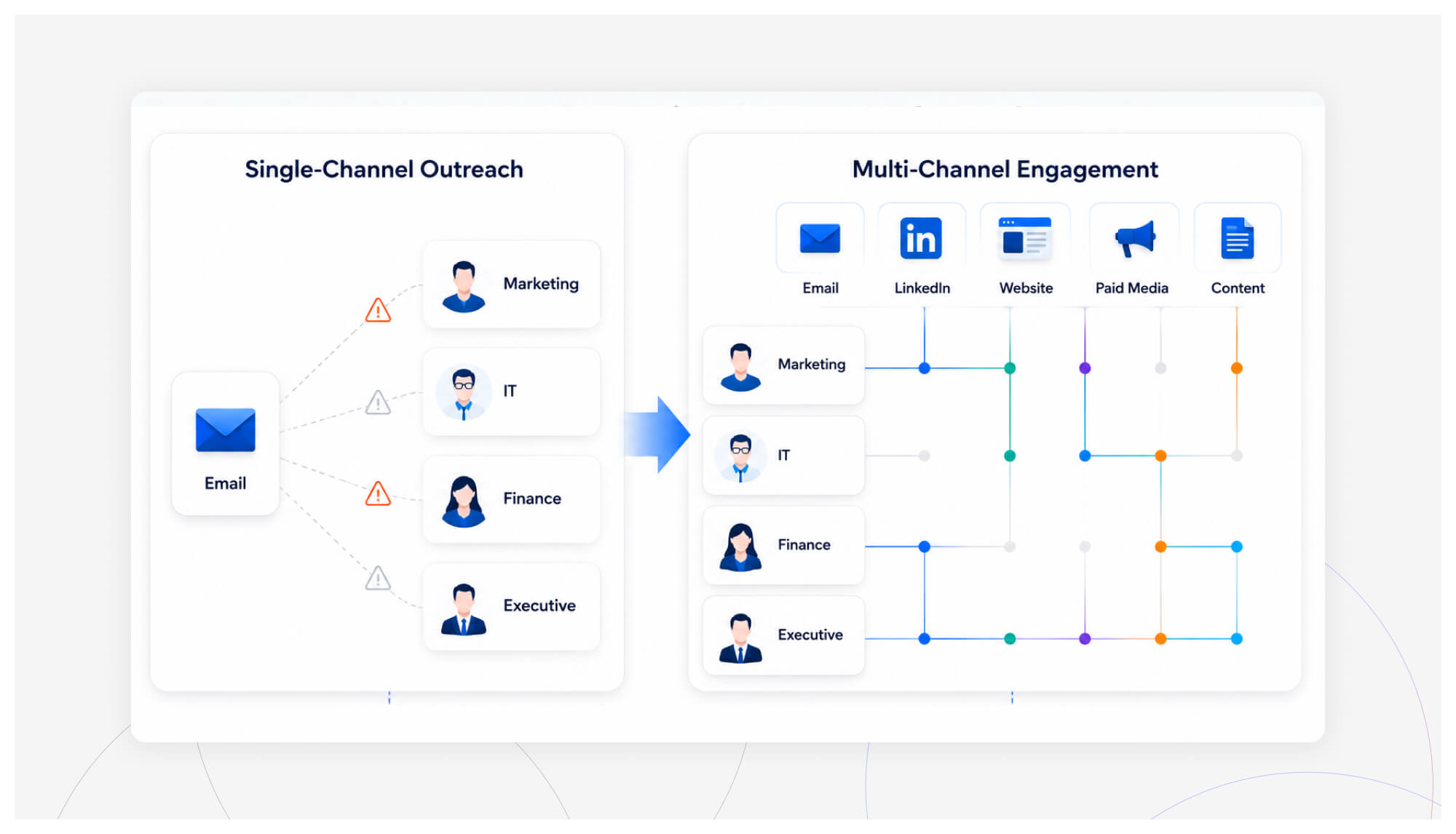
1. The Reality of Today's Buying Committees
Modern B2B purchases rarely depend on a single decision-maker. Enterprise deals often involve four to ten stakeholders across departments such as IT, finance, operations, and executive leadership. Each role brings different priorities, content needs, and preferred channels.
A marketing leader may engage with LinkedIn content, while a finance stakeholder may notice ROI-focused ads, and technical buyers often look for detailed resources delivered through email. No single channel effectively reaches every stakeholder involved in the decision.
2. Buyer Attention Is Fragmented
Buyer attention is spread across platforms. Email inboxes are crowded, with many messages never opened. LinkedIn reach has become less predictable due to increased competition and changing algorithms. Depending on only one platform limits visibility and reduces the chances of meaningful engagement throughout the buying journey.
3. The Rule of Repeated Exposure
Trust in B2B sales is built through familiarity. Buyers are more likely to engage with brands they recognize, and recognition develops over multiple interactions. Effective B2B outreach relies on repeated, well-timed touchpoints across channels rather than a single message.
The Core Channels of a Multi-Channel ABM Strategy
1. Email Marketing
Email continues to be a strong channel for ABM when it is personalized and relevant. In a multi-channel ABM approach, email focuses on account-specific messaging based on buyer roles, industry, and stage in the buying journey. These campaigns help nurture prospects over time rather than relying on generic sequences.
2. LinkedIn Marketing
LinkedIn plays a key role in reaching target accounts through precise job titles and company targeting. Sponsored content supports awareness, while direct engagement such as connection requests and content interactions helps build relationships. Retargeting keeps the brand visible to stakeholders who have already shown interest.
3. Paid Media and Account-Based Advertising
Display and programmatic advertising extend ABM efforts beyond social platforms. By targeting specific accounts, teams reinforce key messages across the web and maintain consistent visibility throughout the buying process.
4. Website Personalization
Personalized website experiences adapt landing pages, content, and calls to action based on the visiting account. This relevance improves engagement and conversion rates.
5. Intent Data and Buyer Signals
Intent data highlights accounts actively researching related topics, helping teams prioritize outreach and time engagement more effectively.
How Multi-Channel ABM Campaigns Work Together
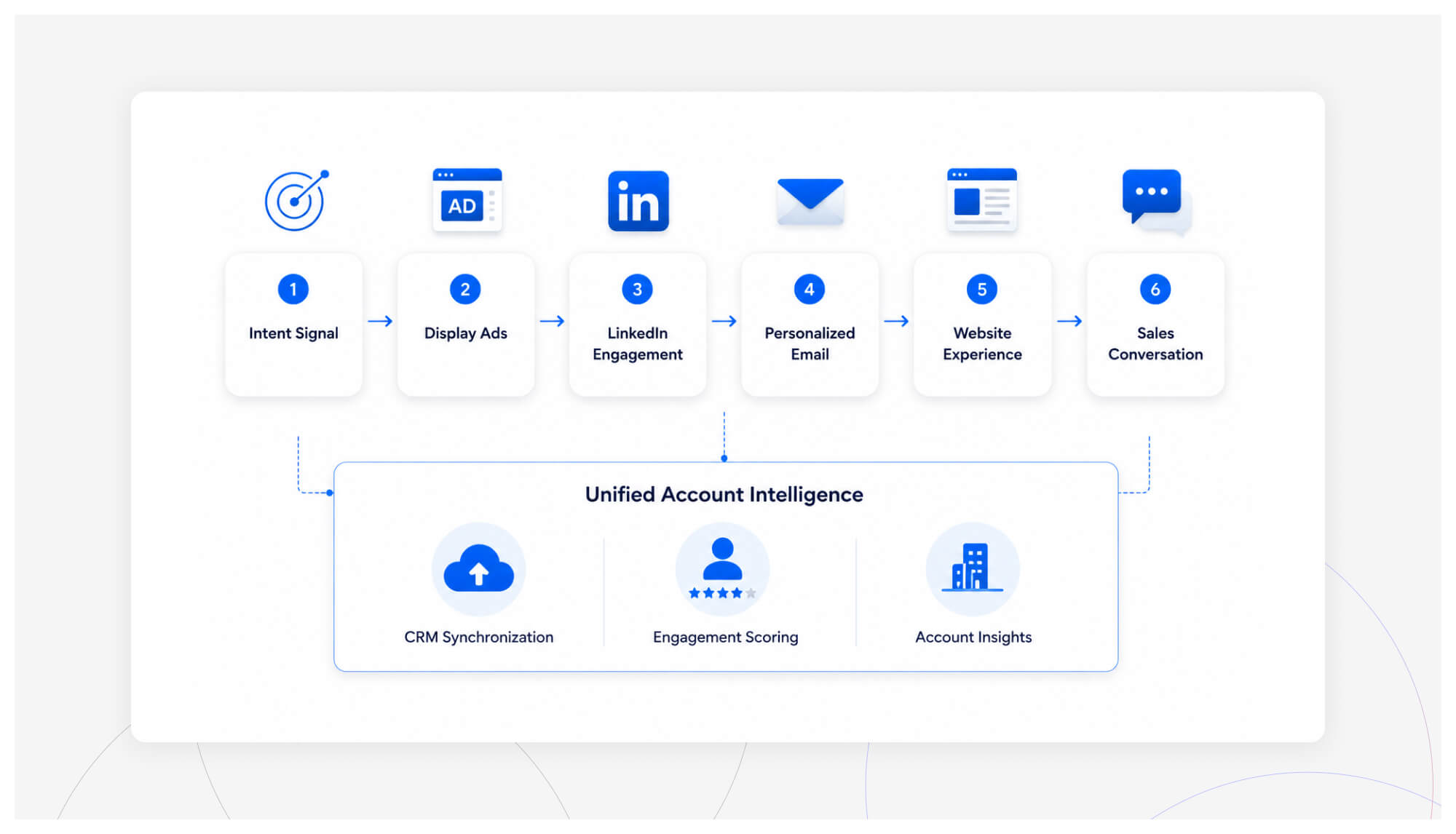
1. Creating a Unified Account Journey
A multi-channel ABM campaign is designed around a connected account journey where each interaction builds on the previous one. It often begins when intent data shows an account is researching relevant topics. Display ads introduce the brand, LinkedIn engagement reinforces the message, and personalized emails address specific challenges. Website visits trigger tailored content experiences, giving sales the context needed for informed outreach at the right moment.
2. Coordinating Messaging Across Channels
Message alignment across channels is critical to maintaining clarity and trust. If an account sees a LinkedIn ad focused on a specific business problem, follow-up emails, ads, and landing pages should reinforce the same value. Disconnected messaging across channels can confuse stakeholders and weaken credibility, while consistent themes help move accounts forward more efficiently.
3. Using Data to Orchestrate Engagement
Data connects the entire multi-channel ABM motion. CRM systems and marketing automation platforms centralize engagement signals from email, LinkedIn, ads, and website activity. Engagement scoring and account insights help marketing and sales prioritize accounts, adjust outreach, and act based on real buying signals rather than isolated interactions.
Benefits of Multi-Channel ABM for B2B Organizations
1. Higher Account Engagement
Engaging target accounts across multiple channels increases the chances of reaching key decision-makers. Stakeholders who may ignore email often respond through LinkedIn, paid ads, or website interactions. Repeated exposure across platforms improves brand recall and drives stronger engagement throughout the buying process.
2. Improved Pipeline Quality
Accounts exposed to consistent messaging across channels enter sales conversations with higher intent and better context. This leads to better-qualified opportunities, clearer expectations, and more accurate pipeline forecasting.
3. Faster Sales Cycles
When buyers are educated through multiple touchpoints before speaking with sales, conversations progress faster. Common objections surface earlier, reducing friction during evaluation and decision-making.
4. Stronger Marketing and Sales Alignment
Multi-channel ABM relies on shared account visibility and coordinated outreach. Marketing and sales teams work from the same engagement data, supporting more focused B2B outreach and better collaboration.
Common Challenges and How to Overcome Them
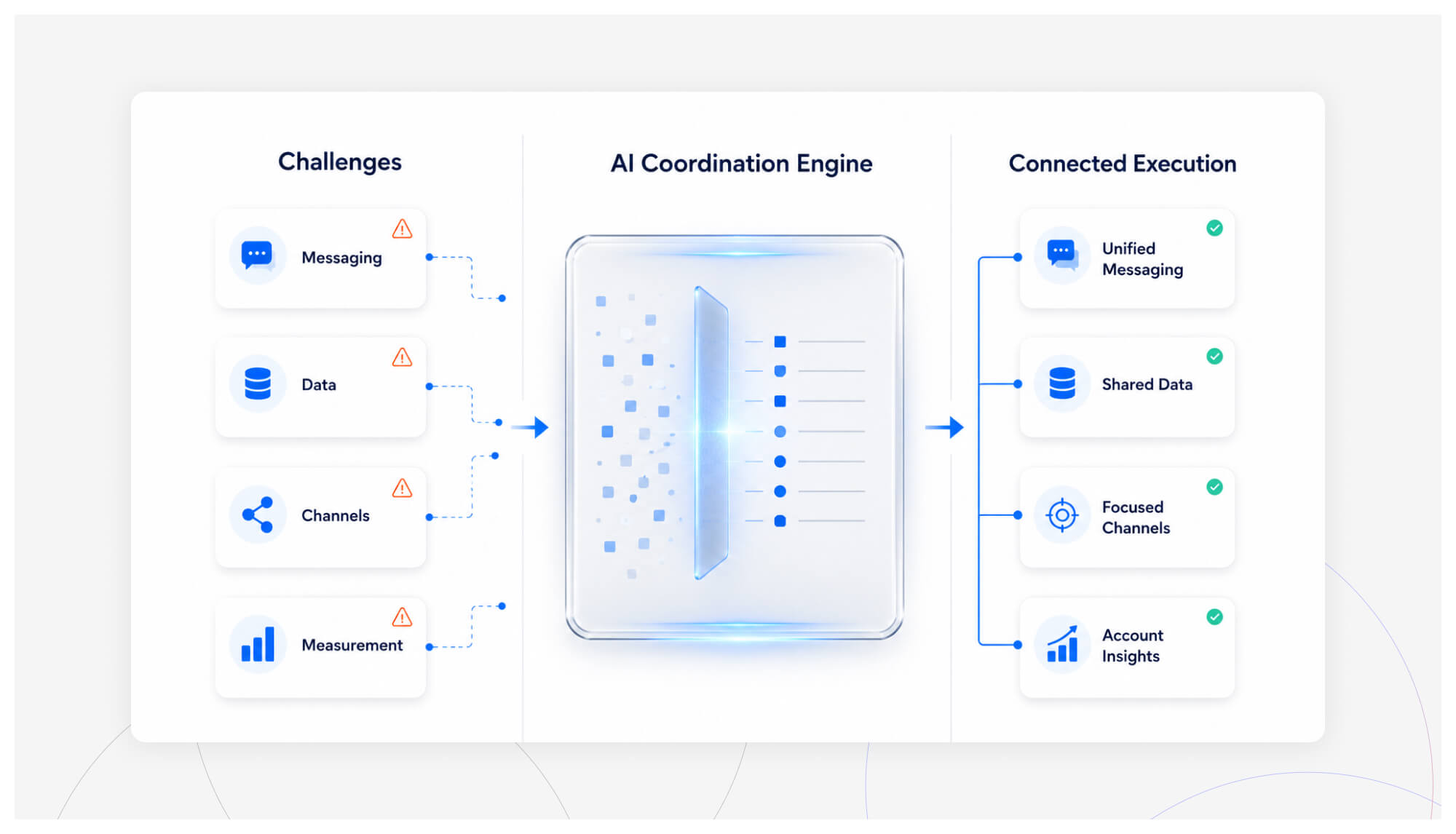
1. Messaging Inconsistency
When different teams own different channels, messages can start to drift. The most effective fix is a shared campaign framework that clearly defines core themes and value propositions. Every channel should pull from the same playbook, not invent its own story.
2. Data Fragmentation
Account data often lives across email tools, ad platforms, CRM systems, and analytics dashboards. Bringing this information into a central CRM or ABM platform makes it easier to understand how accounts are engaging and where momentum is building.
3. Channel Overload
Trying to activate too many channels at once can stretch teams thin. Focusing on the two or three channels where target accounts are most active usually delivers better results than spreading effort too widely.
4. Measuring Attribution
Multi-touch attribution is complex in ABM. Looking at overall account engagement provides clearer insight than assigning credit to individual touchpoints.
Best Practices for Building a Successful Multi-Channel ABM Program
1. Start With High-Value Target Accounts
Multi-channel ABM works best when focused on accounts with a clear fit. Use ideal customer profile criteria such as firmographics, revenue potential, and business relevance to prioritize accounts with a realistic chance of conversion.
2. Personalize Beyond First Names
Effective personalization reflects the account industry, the buyer’s role, and their challenges. Messaging should speak to real problems and priorities, not rely on generic content paired with surface-level customization.
3. Align Sales and Marketing Teams Early
ABM requires shared ownership from the start. Sales and marketing teams should agree on target accounts, success metrics, and responsibilities to avoid duplication and keep outreach coordinated across the buying journey.
4. Use Intent Data Strategically
Intent data matters most when it drives action. Prioritize accounts showing active research behavior and trigger outreach when interest peaks, rather than treating intent signals as passive reporting metrics.
5. Continuously Optimize Channel Performance
Multi-channel ABM improves through iteration. Regularly review engagement data, test messaging and cadence, and adjust channel focus based on what resonates most with target accounts over time.
Measuring Multi-Channel ABM Success
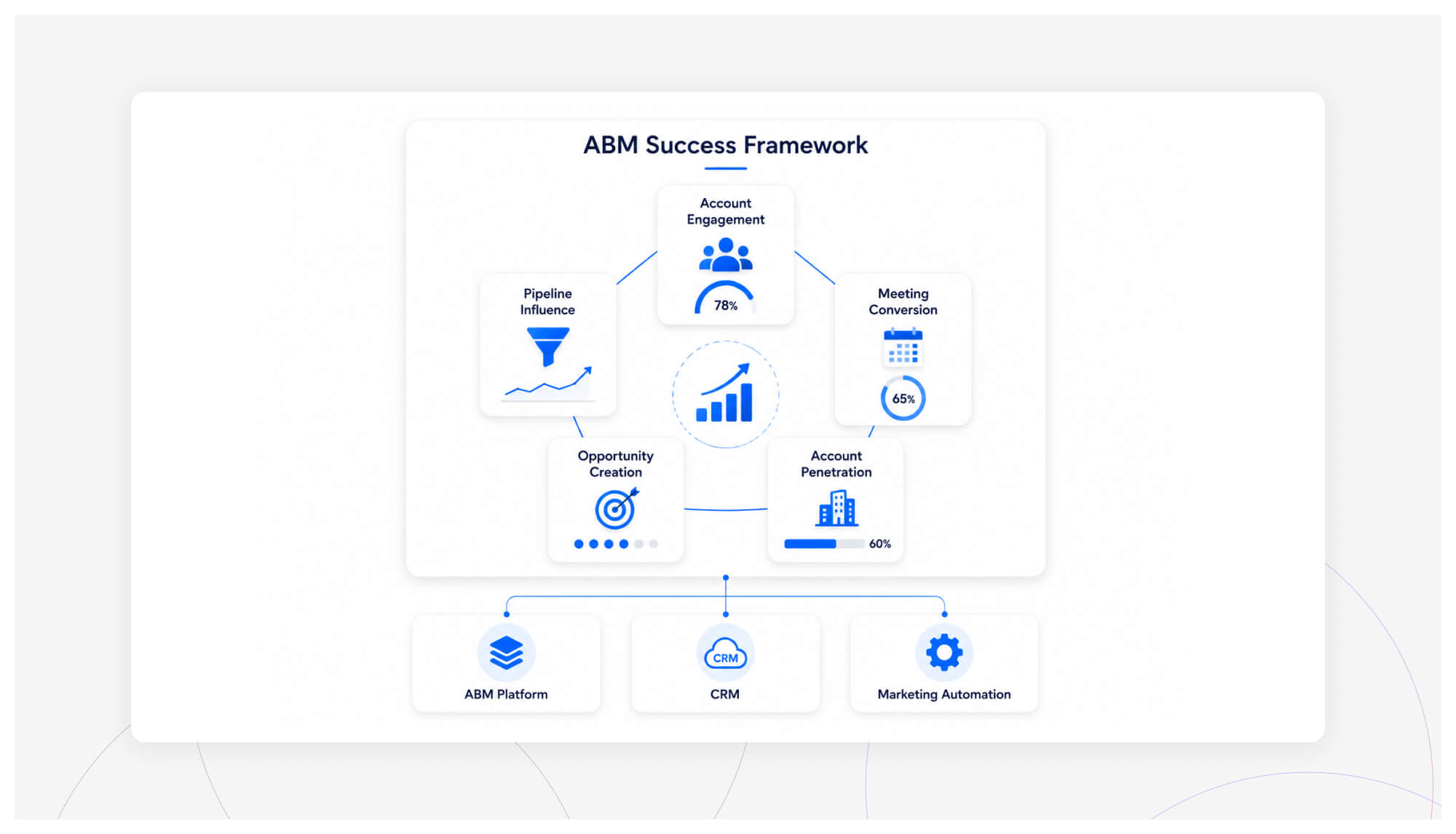
1. Key Metrics to Track
Multi-channel ABM success is measured at the account level. Account engagement scores show combined activity across channels. Influenced pipeline highlights revenue touched by ABM efforts. Meeting conversion rates, opportunity creation, and account penetration reveal how engagement translates into real sales progress.
2. Technology That Supports Measurement
Measurement depends on connected systems. ABM platforms aggregate account engagement signals, CRM systems track pipeline and opportunities, and marketing automation tools capture email and content interactions. Analytics dashboards bring these inputs together, giving marketing and sales teams shared visibility into account performance.
Conclusion: The Future of ABM Is Multi-Channel
Email and LinkedIn still matter, but they no longer cover the full B2B buying journey. Buyers use more platforms, involve more people in decisions, and take longer to move from interest to purchase. Relying on one or two channels leaves too many gaps in visibility and engagement.
Multi-channel and omnichannel ABM solve this by bringing together email, LinkedIn, paid media, website experiences, and intent data into a single, coordinated approach. This is where platforms like Massmetric help B2B teams connect outreach across channels and maintain consistency throughout the account journey. When stakeholders encounter aligned messaging across touchpoints, familiarity builds and sales conversations become more productive.
ABM works when outreach matches buyer behavior. Limiting effort to a narrow set of channels leaves too many decision‑makers out of the conversation.
Frequently Asked Questions
|